

Table of Contents
- Introduction( Concrete Material in ANSYS APDL)
- What is Concrete Material in ANSYS APDL?
- Linear Elastic Concrete Material
- Characteristic Concrete Compressive Strength (fc)
- Calculate Young’s Modulus (E)
- Define Poisson’s Ratio and Density
- Nonlinear Concrete Material
- SOLID65 Concrete Material
- William-Warnke Concrete Model
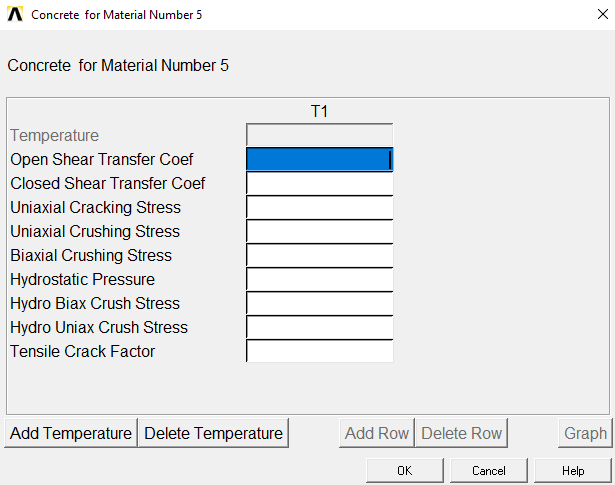
- Open Shear Transfer Coefficient
- Closed Shear Transfer Coefficient
- Uniaxial Cracking Stress
- Uniaxial Crushing Stress
- Biaxial Crushing Stress
- Hydrostatic Stress State Parameters
- Tensile Crack Factor
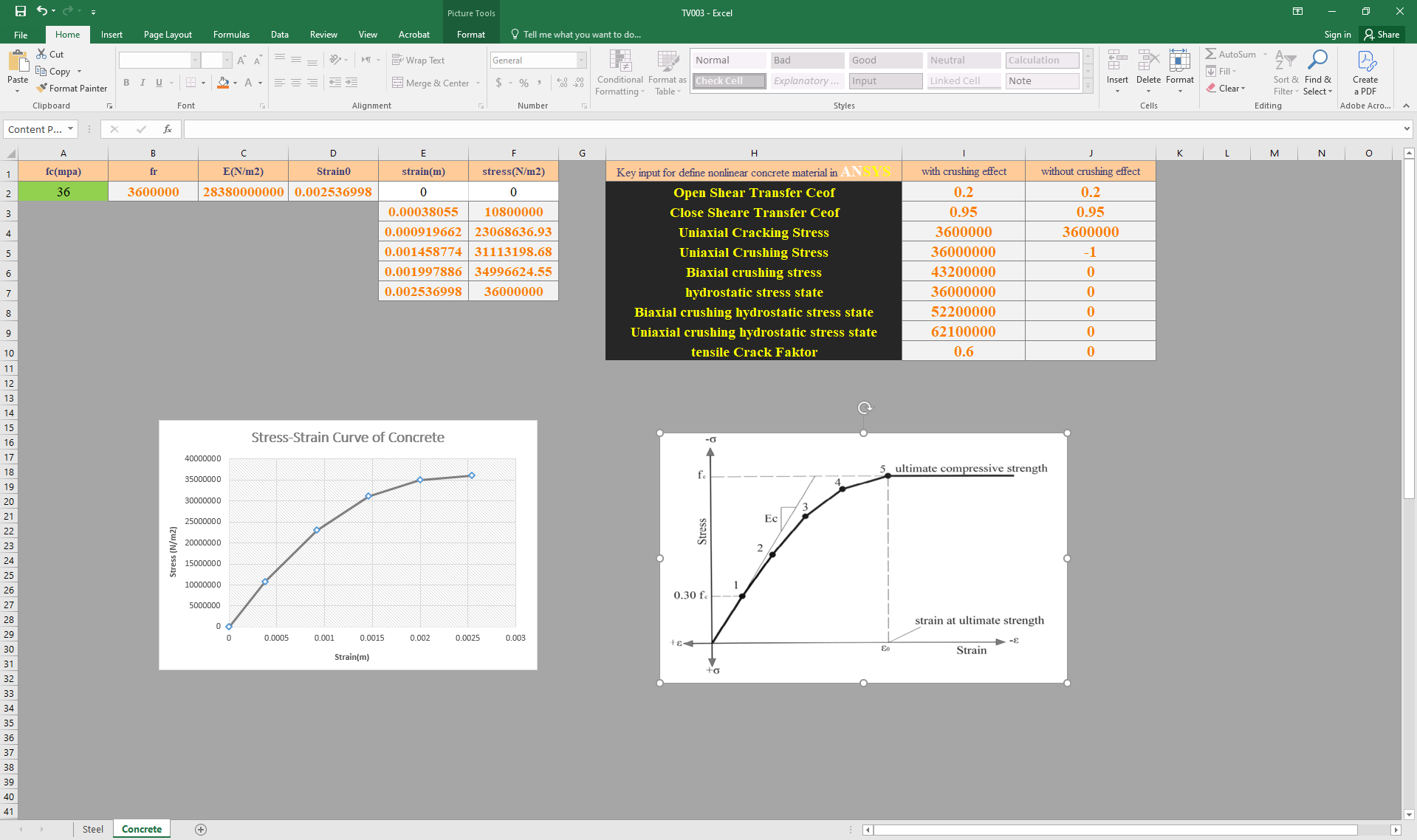
- Concrete Stress-Strain Curve
- Automatic Excel Calculator
- Import Material into ANSYS APDL
- Practical Engineering Example
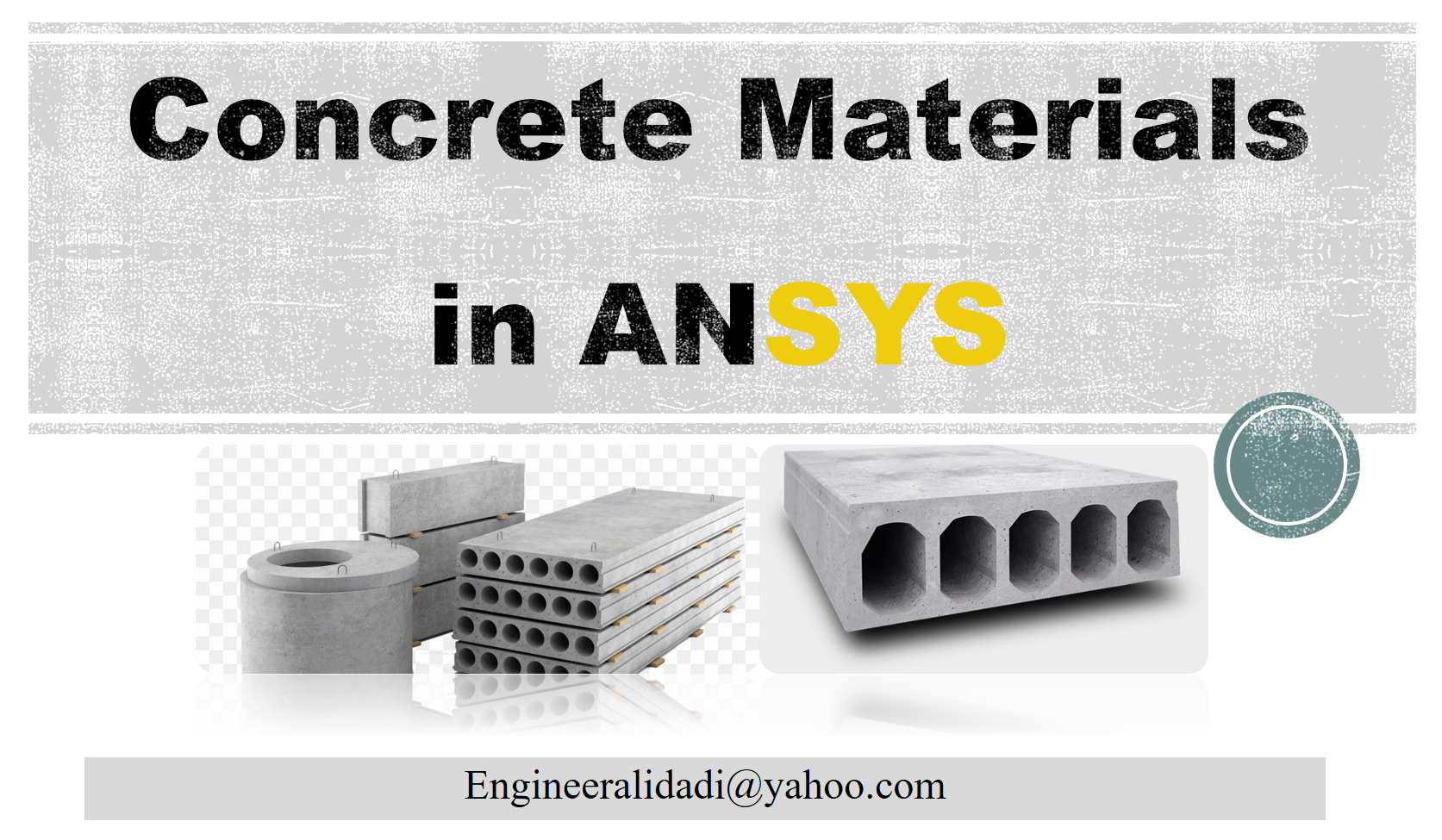
Concrete Material in ANSYS APDL
Concrete is one of the most widely used structural materials in civil engineering, and accurate material modeling is essential for obtaining reliable finite element analysis results.
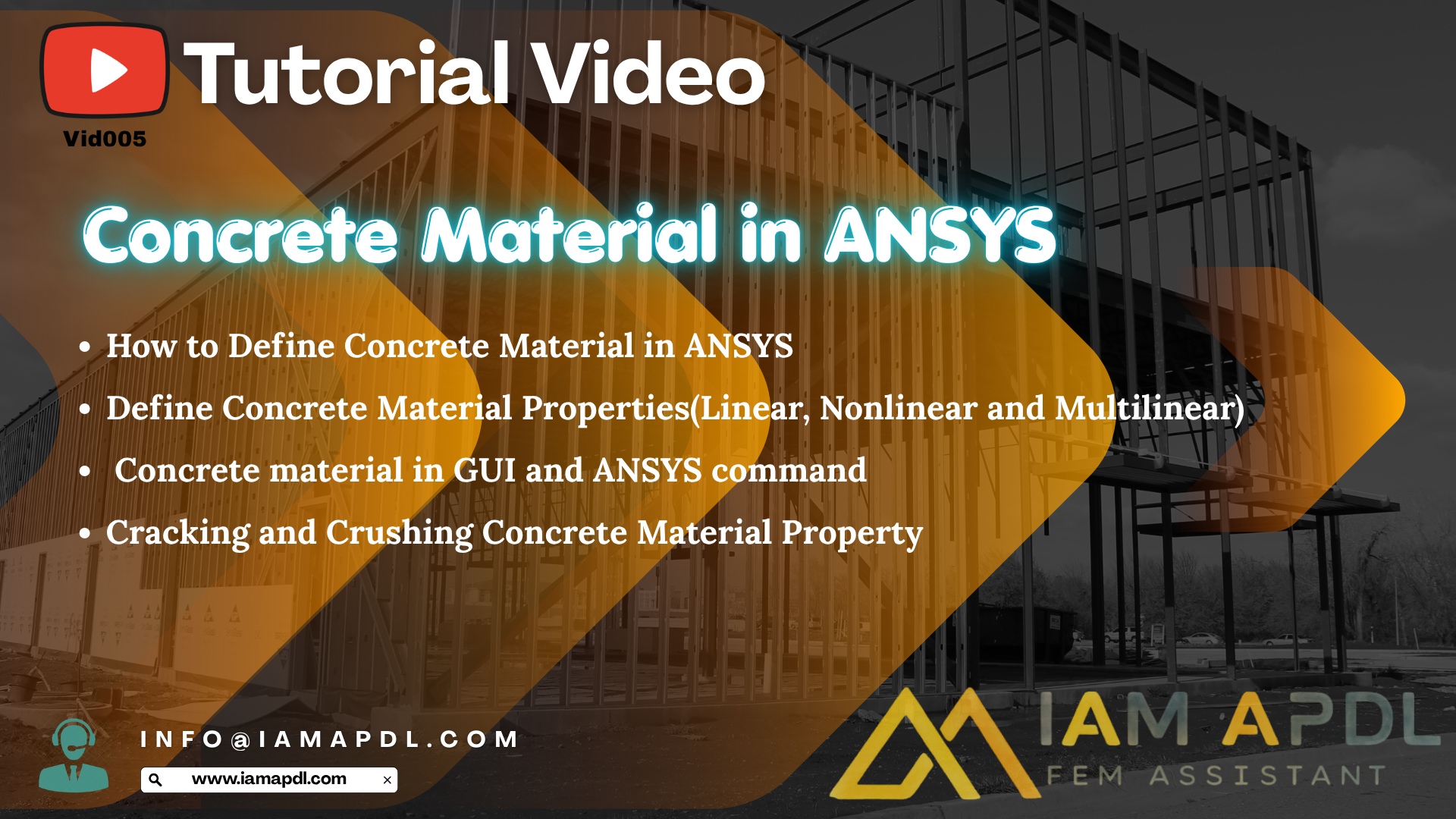
In this comprehensive ANSYS APDL tutorial, you will learn how to define both Linear Elastic and Nonlinear Concrete Material completely from scratch.
Unlike many basic tutorials, this course explains not only how to enter material properties into ANSYS APDL but also why each parameter is required and how it influences the nonlinear behavior of reinforced concrete structures.
The tutorial also includes a custom-developed Excel Calculator that automatically computes all required ANSYS concrete parameters from the 28-day concrete compressive strength (fc). Simply enter the concrete strength, and the spreadsheet generates the complete material properties required for ANSYS APDL.
This tool significantly reduces modeling time while minimizing human error.
What You Will Learn
- Define Linear Elastic Concrete Material
- Define Nonlinear Concrete Material
- Characteristic Concrete Compressive Strength (fc)
- Calculate Young’s Modulus (E)
- Define Poisson’s Ratio (ν)
- Define Density (ρ)
- Generate Stress-Strain Curve
- Define SOLID65 Material
- Define William-Warnke Concrete Model
- Open Shear Transfer Coefficient
- Closed Shear Transfer Coefficient
- Uniaxial Cracking Stress
- Uniaxial Crushing Stress
- Biaxial Crushing Stress
- Hydrostatic Stress State
- Tensile Crack Factor
- Import Material Data into ANSYS APDL
- Use Automatic Excel Calculator
- Save Material Database
- Professional Engineering Workflow
Why This Course?
Most ANSYS tutorials simply provide several numbers and ask you to enter them into the software.
This course teaches the engineering concepts behind every parameter.Concrete Material in ANSYS APDL
You will understand:
- why each material parameter exists,
- how ANSYS APDL uses it,
- when nonlinear material behavior should be activated,
- and how different concrete strengths affect the numerical model.
The included Excel calculator makes defining concrete materials extremely fast for real engineering projects.
Included Excel Calculator
This course contains a professional Excel spreadsheet developed specifically for ANSYS APDL users.
The calculator automatically generates:
- Characteristic compressive strength (fc)
- Young’s Modulus (E)
- Poisson’s Ratio
- Density
- Stress-Strain Curve
- Open Shear Transfer Coefficient
- Closed Shear Transfer Coefficient
- Uniaxial Cracking Stress
- Uniaxial Crushing Stress
- Biaxial Crushing Stress
- Hydrostatic Stress Parameters
- Tensile Crack Factor
Simply enter the concrete compressive strength, and all required ANSYS APDL parameters are calculated automatically.
Who Should Watch This Course?
- Civil Engineers
- Structural Engineers
- Earthquake Engineers
- Geotechnical Engineers
- FEM Engineers
- ANSYS APDL Beginners
- Graduate Students
- PhD Researchers
Free YouTube Preview
Before purchasing the complete course, you can watch the free preview on our official YouTube channel.
- Nonlinear
- Concrete
- Characteristic concrete compressive strength( fc )
- Calculate young s modulus (E)
- Can use Excel File
- Supply Nonlinearity Property in Ansys
- Crack, Crush And…

Related Courses
- Steel Material in ANSYS APDL
- Material Models in ANSYS APDL
- ANSYS Element Tutorial
- ANSYS Installation Tutorial
- Hyper Elastic Material in ANSYS APDL
- Soil Material in ANSYS APDL