

Table of Contents
- Introduction Define Material Properties in ANSYS APDL | Complete Engineering Guide
- Why Material Properties Matter in Finite Element Analysis
- What Are Material Models?
- Material Models in ANSYS APDL
- Linear Material Models
- Nonlinear Material Models
- Elastic Materials
- Plastic Materials
- Hyperelastic Materials
- Bilinear Material Models
- Multilinear Material Models
- Material Properties Supported by Different Element Types
- How to Define Material Properties in ANSYS APDL | Complete Engineering Guide
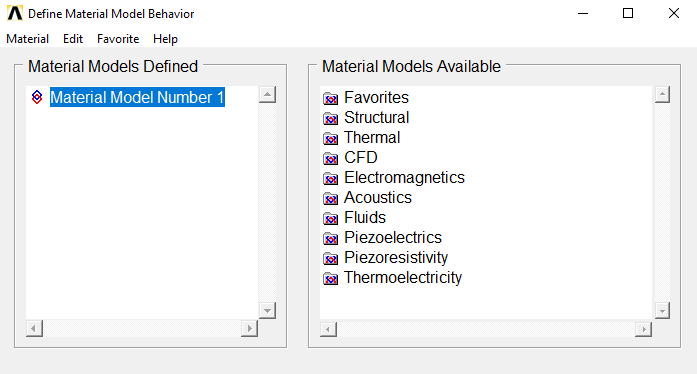
- Material Definition Using the GUI
- Material Definition Using APDL Commands
- How ANSYS Implements Material Models
- Finding Reliable Material Property Data
- Saving Material Libraries for Future Projects
- Best Practices for Material Definition
- Common Mistakes When Defining Materials
- Frequently Asked Questions
- Conclusion Define Material Properties in ANSYS
- Continue Your ANSYS APDL Learning
Product Description
Define Material Properties in ANSYS APDL | Complete Engineering Guide
One of the most critical steps in finite element modeling is defining accurate material properties. Even with a perfect geometry, mesh, loading conditions, and boundary conditions, incorrect material definitions can produce unrealistic simulation results.
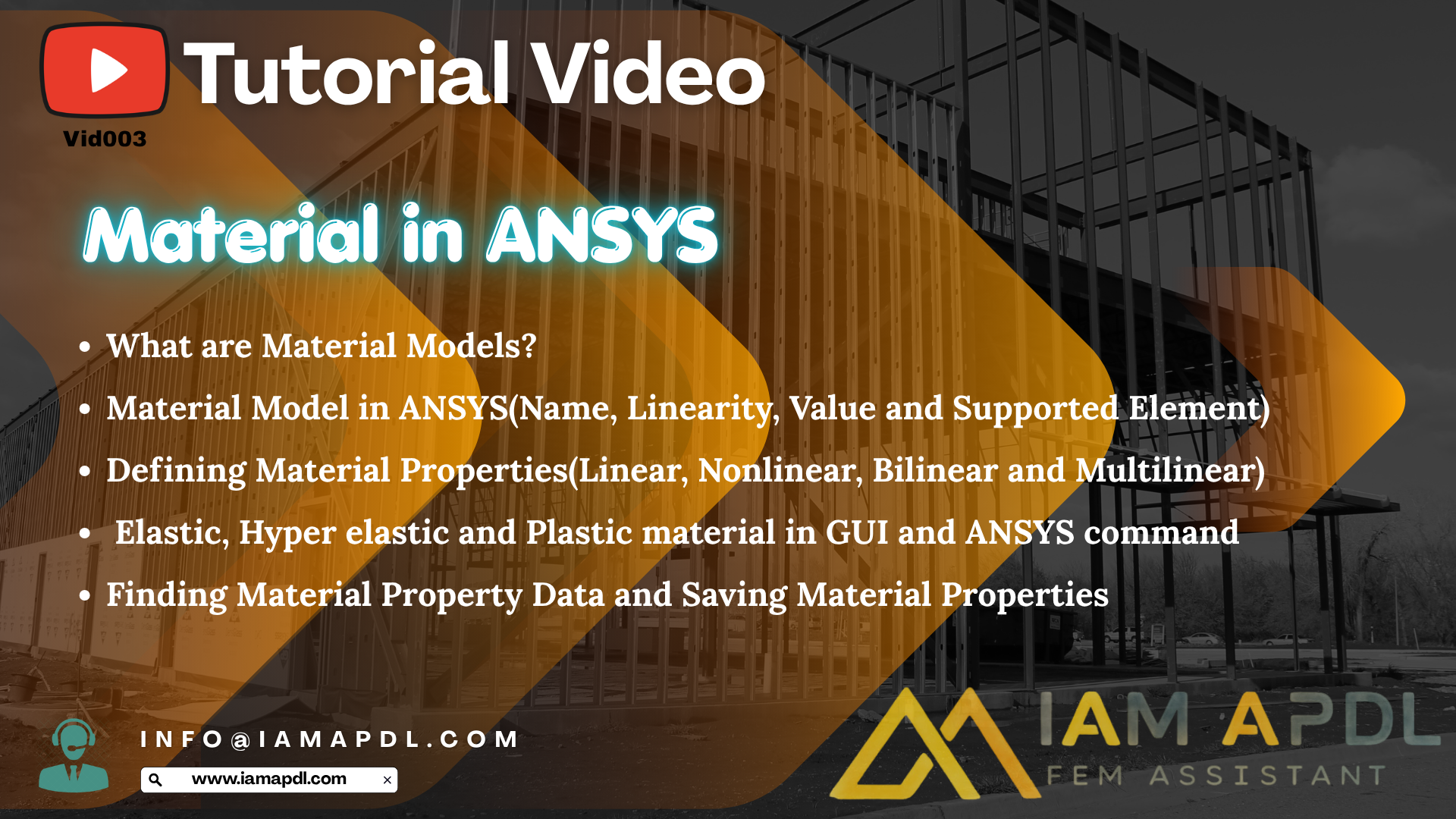
Defining Material Properties(Linear, Nonlinear Bilinear and Multilinear and Elastic, Hyper elastic and Plastic material in GUI and ANSYS command)
What are Material Models?
This comprehensive tutorial teaches you how material models are implemented in ANSYS APDL and how to define engineering materials correctly for different structural analyses.Define Material Properties in ANSYS APDL | Complete Engineering Guide
Instead of simply entering numerical values, you will learn the engineering concepts behind material behavior and understand when to use different material models.
What You Will Learn
- ✔ What material models are
- ✔ How ANSYS implements material behavior
- ✔ Linear and nonlinear material models
- ✔ Elastic material definition
- ✔ Plastic material models
- ✔ Hyperelastic material models
- ✔ Bilinear hardening models
- ✔ Multilinear hardening models
- ✔ Material property implementation
- ✔ Material data management
- ✔ Saving material libraries
- ✔ Finding reliable engineering material data
This Tutorial Covers
- Understanding Material Models
- Material Models in ANSYS APDL
- Material Definition Philosophy
- Linear Elastic Materials
- Nonlinear Materials
- Bilinear Hardening
- Multilinear Hardening
- Hyperelastic Materials
- Material Properties
- Material Commands
- GUI Material Definition
- APDL Material Commands
- Material Property Database
- Saving Materials
- Engineering Applications
Why Material Definition Is Important
Material properties determine how every structure responds to external loading.Define Material Properties in ANSYS APDL | Complete Engineering Guide
A small mistake in defining Young’s Modulus, Poisson’s Ratio, Yield Strength, or Plastic Hardening may completely change displacement, stress distribution, and structural behavior.
This tutorial explains not only how to define materials, but also why selecting the correct material model is essential for obtaining reliable finite element results.
Practical Topics Included
This course explains Define Material Properties in ANSYS APDL | Complete Engineering Guide:
- Material Name
- Linearity
- Supported Element Types
- Elastic Material Definition
- Plastic Material Definition
- Hyperelastic Material Models
- Bilinear Hardening
- Multilinear Hardening
- Material Commands (MP, TB, TBDATA)
- Material Database
- Saving Material Libraries
- Material Reuse in Future Projects
Who Should Watch This Course?
This tutorial is recommended for:
- Civil Engineers
- Structural Engineers
- Mechanical Engineers
- Geotechnical Engineers
- Earthquake Engineers
- Finite Element Engineers
- Graduate Students
- Researchers
- ANSYS APDL Users
Frequently Asked Questions
Define Material Properties in ANSYS APDL | Complete Engineering Guide
What is a Material Model in ANSYS APDL?
A material model mathematically describes how a material behaves under different loading conditions.
What is the difference between Elastic and Plastic materials?
Elastic materials return to their original shape after unloading, while plastic materials undergo permanent deformation.
When should Bilinear or Multilinear material models be used?
These models are commonly used for metals experiencing yielding and plastic deformation.
Does this course explain APDL commands?
Yes. Both the graphical interface and APDL command methods are covered.
Will I learn how to build my own material library?
Absolutely. The tutorial demonstrates how to save and reuse material definitions for future engineering projects.
Conclusion
Define Material Properties in ANSYS APDL | Complete Engineering Guide
Accurate material definition is the foundation of reliable finite element analysis.
This course explains the theory behind material behavior together with practical implementation in ANSYS APDL, enabling engineers to build realistic numerical models for research and professional engineering applications.