

Table of Contents
- Introduction of Hemispherical Dome Analysis in ANSYS APDL
- Structural Model Description
- Finite Element Modeling in ANSYS APDL
- 3.1 Modeling Procedure
- 3.2 Material Properties
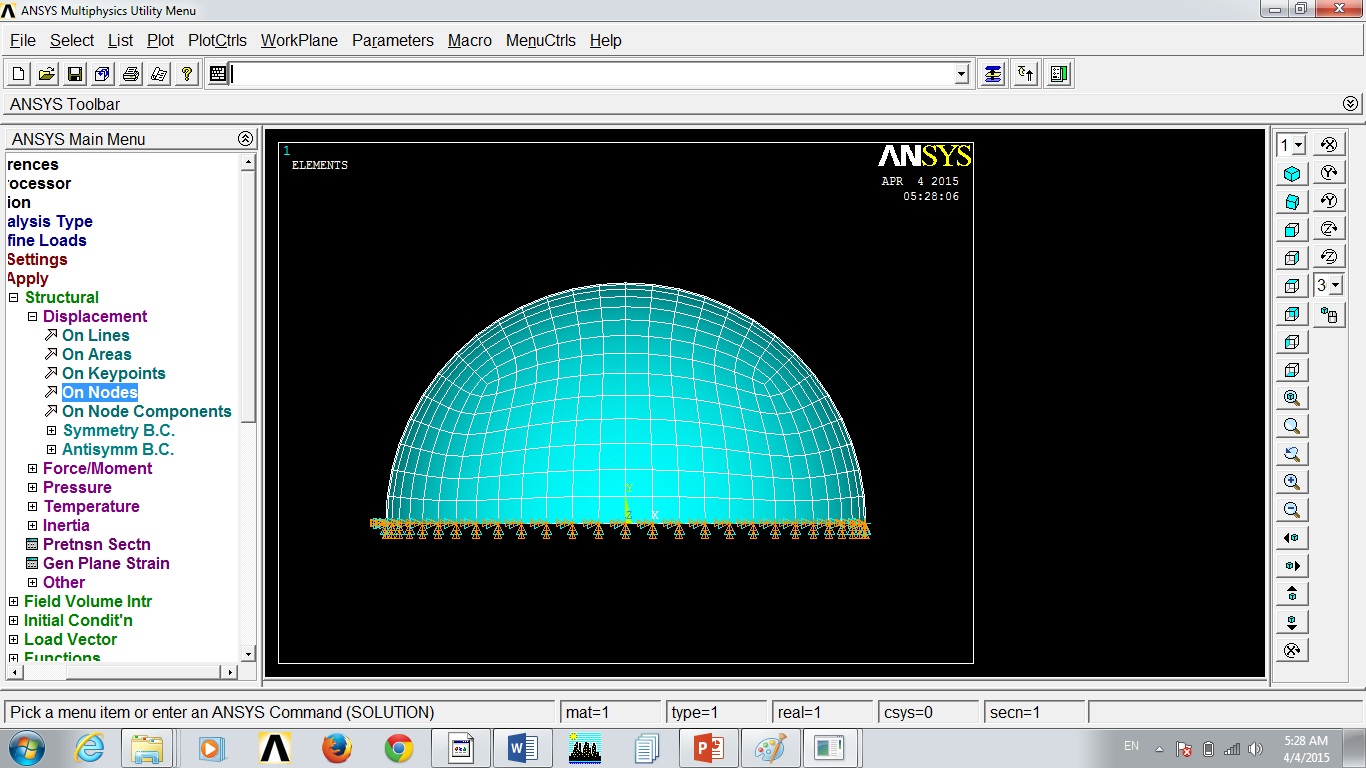
- 3.3 Boundary Conditions and Loading
- Numerical Results
- Conclusion
1. Introduction
Hemispherical domes are widely used in civil, mechanical, and aerospace engineering because of their excellent load-carrying capacity and efficient stress distribution. Typical applications include storage tanks, pressure vessels, industrial roofs, containment structures, and protective shells. Due to their curved geometry, dome structures are capable of transferring external loads primarily through membrane action, resulting in relatively low bending stresses compared with flat structural systems.
Hemispherical Dome Analysis in ANSYS APDL
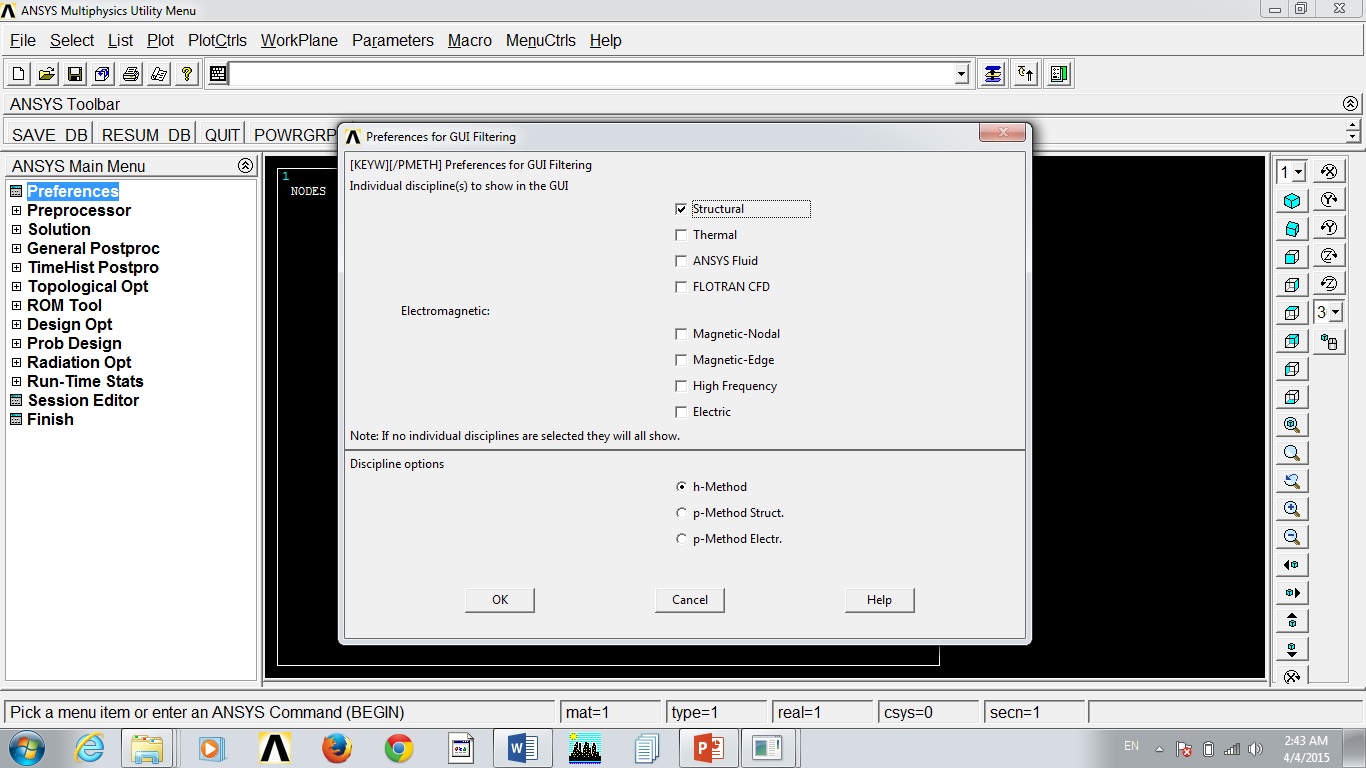
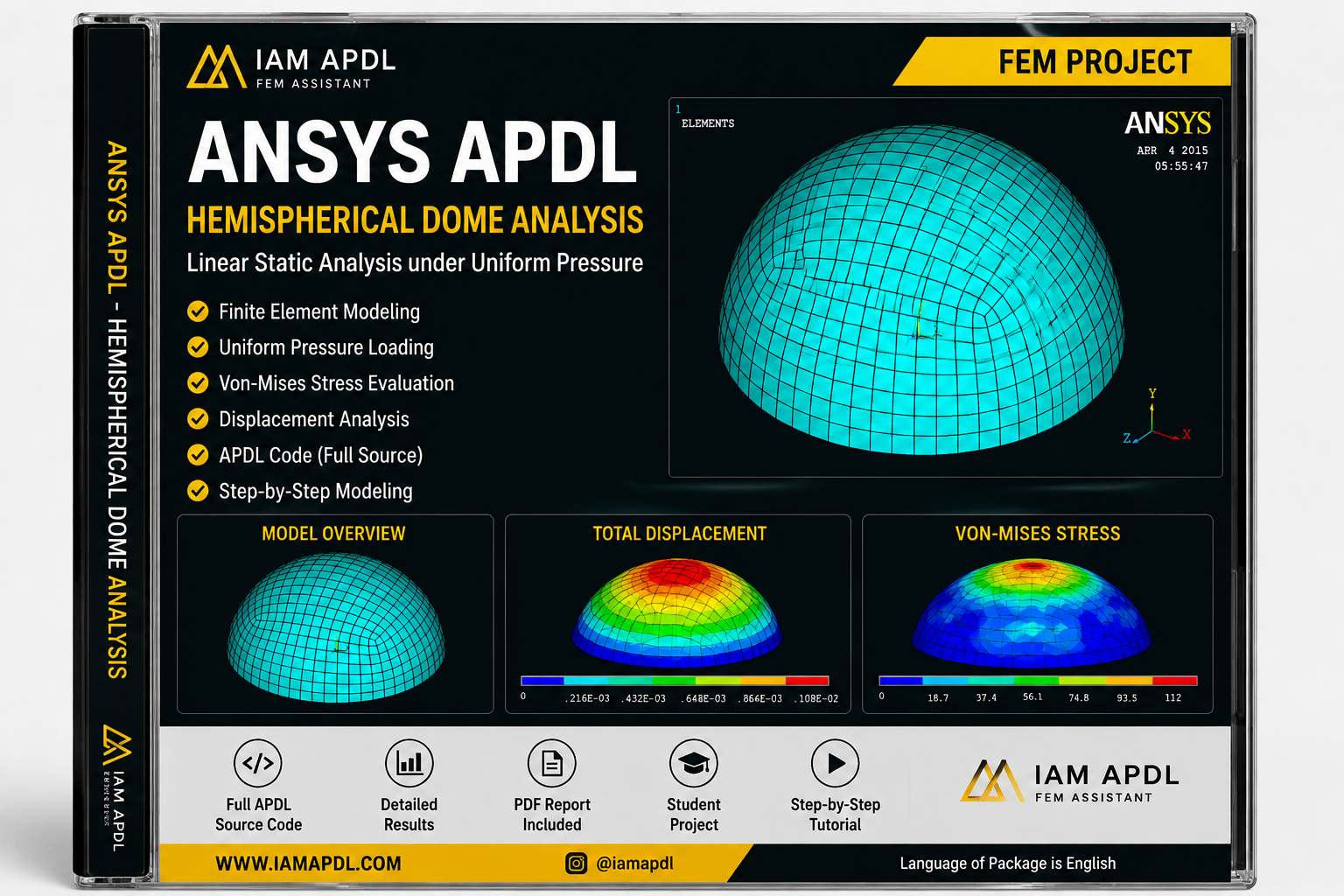
The objective of this educational project is to demonstrate the finite element modeling and structural analysis of a hemispherical steel dome using ANSYS APDL. The project introduces students to shell modeling techniques, boundary condition definition, mesh generation, and stress evaluation under static loading conditions.
Hemispherical Dome Analysis in ANSYS APDL
This project is intended as a practical learning example for undergraduate and graduate engineering students who wish to improve their understanding of shell structures and finite element modeling using ANSYS APDL.
2. Structural Model Description
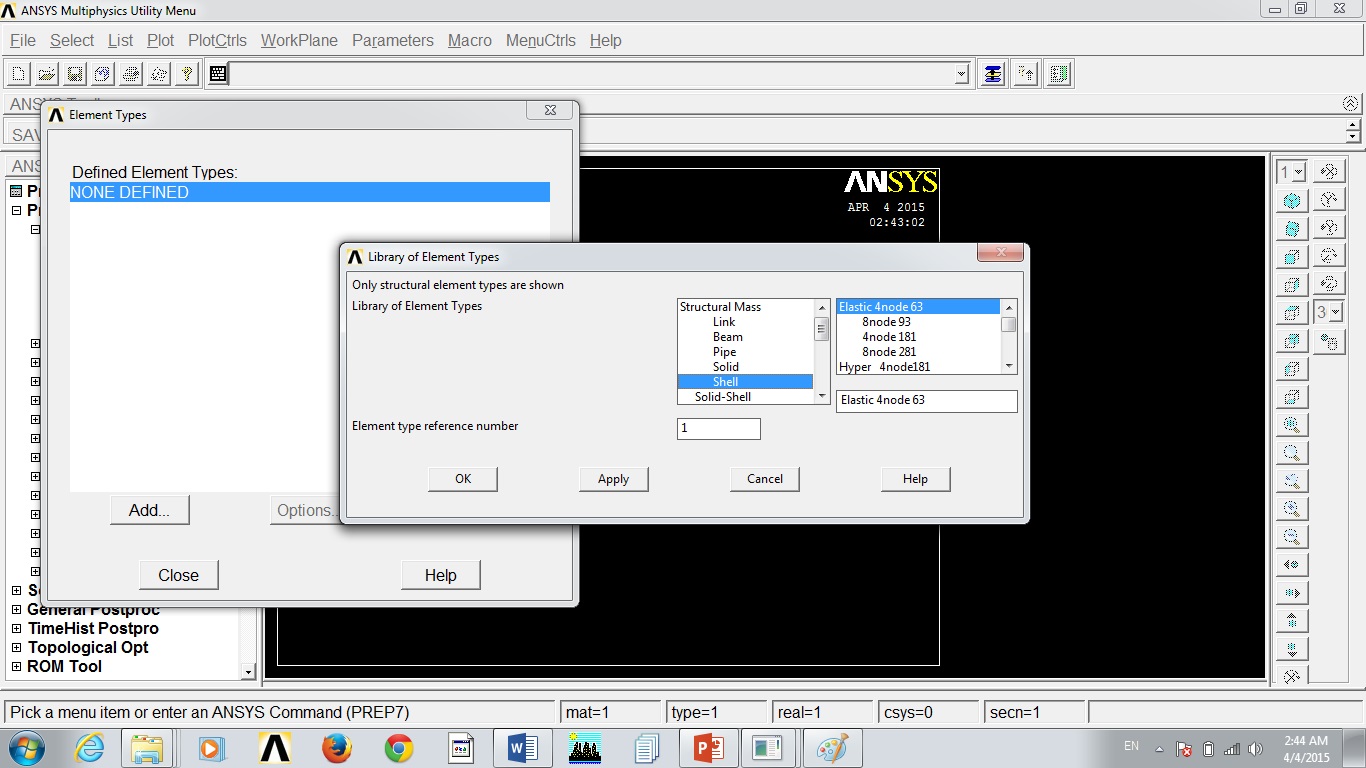
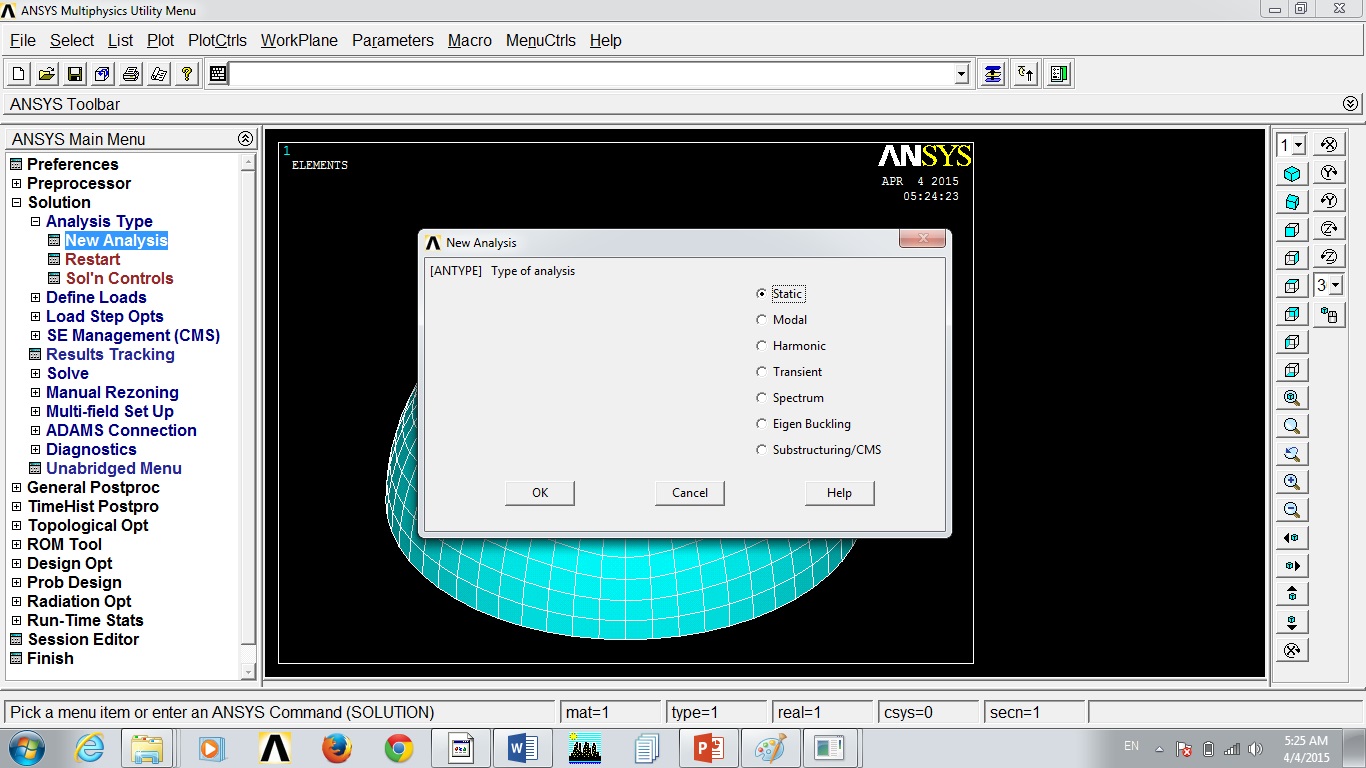
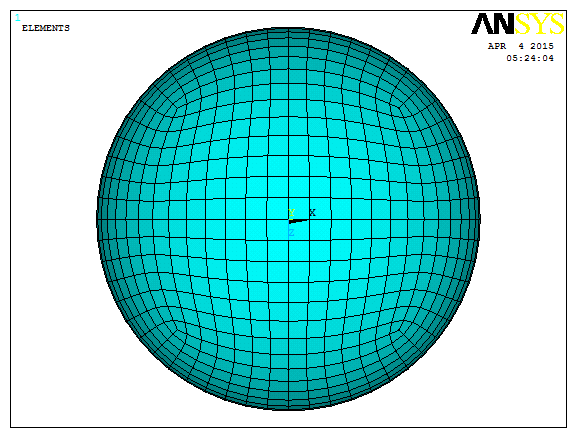
The analyzed structure is a hemispherical steel dome modeled as a three-dimensional shell structure. The geometry is generated parametrically using APDL commands, allowing dimensions and mesh density to be modified efficiently.
Hemispherical Dome Analysis in ANSYS APDL
The model includes:
- Hemispherical shell geometry
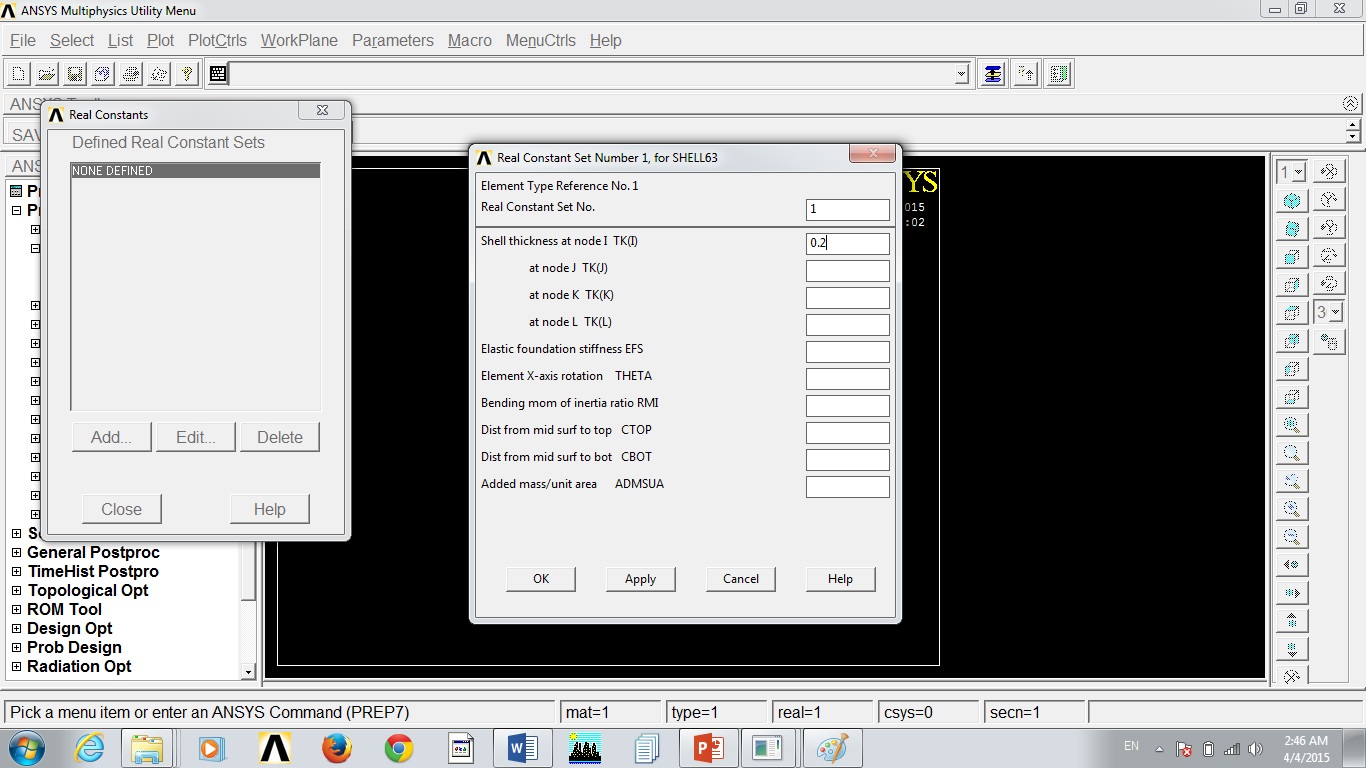
- Uniform shell thickness
- Structural steel material
- Fixed boundary support along the circular base
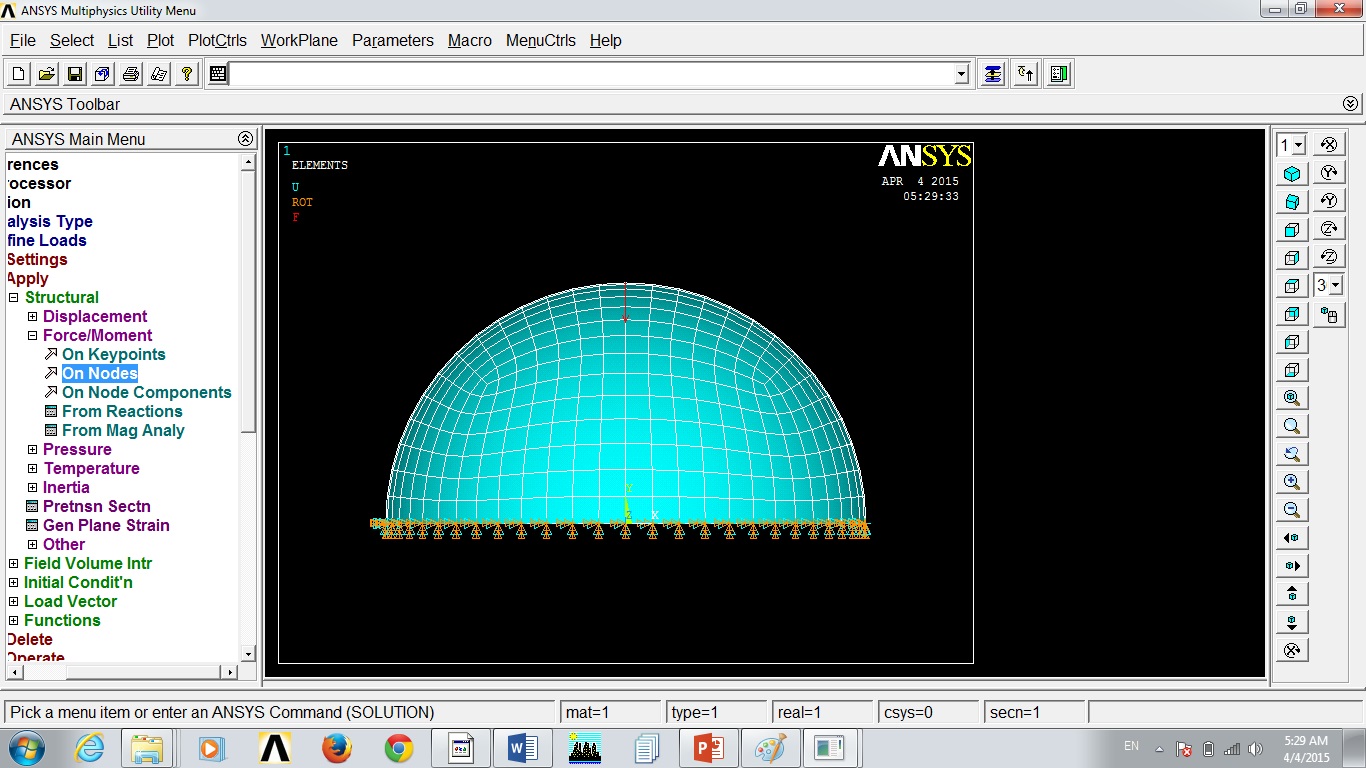
- Uniform external pressure loading
The numerical model is developed entirely using APDL scripting, providing a repeatable and fully parametric workflow suitable for educational purposes.
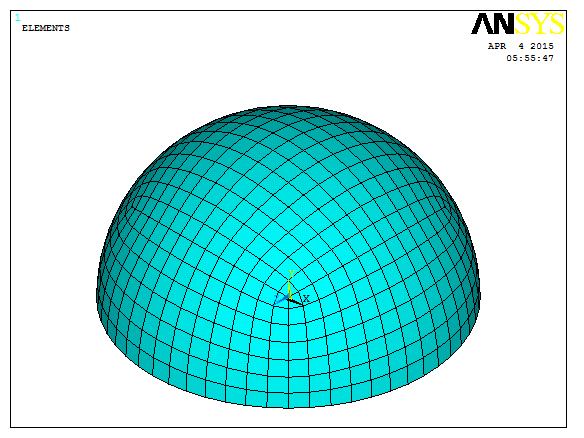
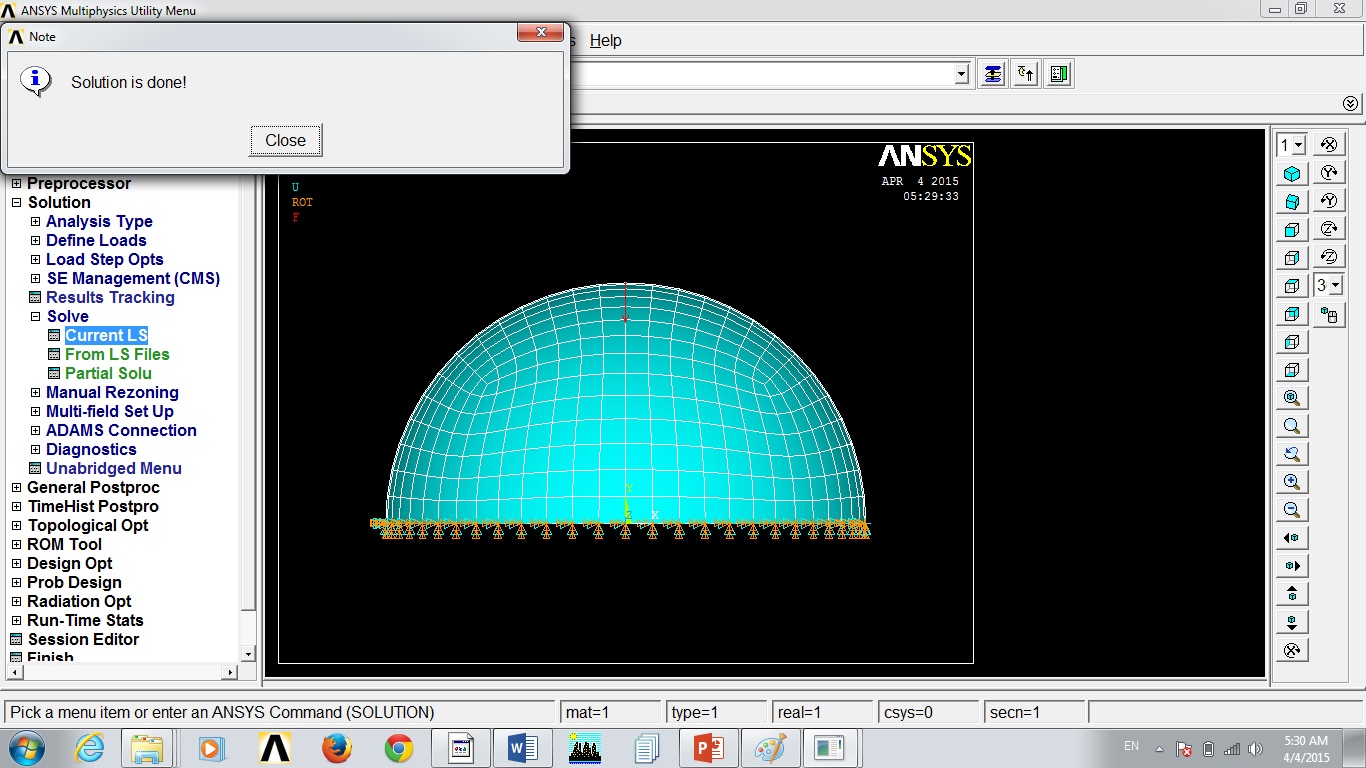
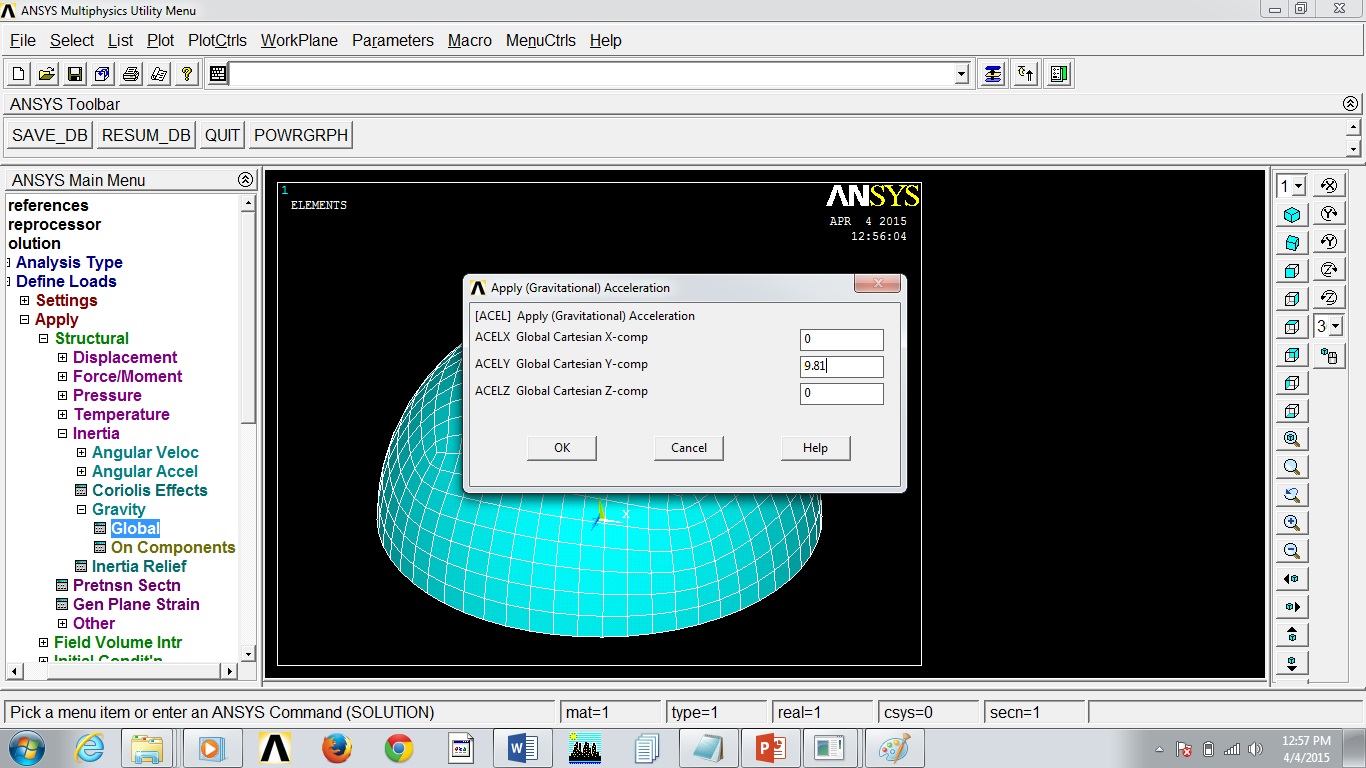
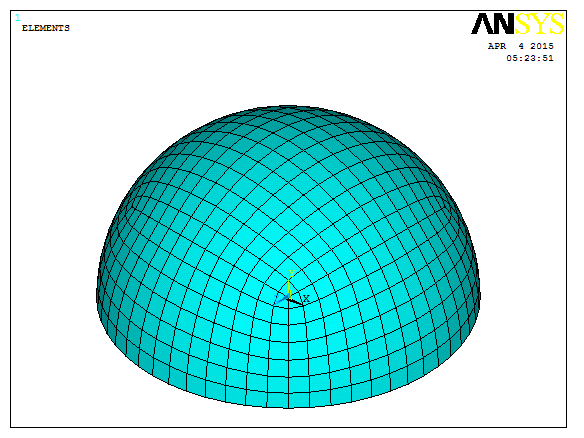
Figure 1. Overall finite element model of the hemispherical dome.
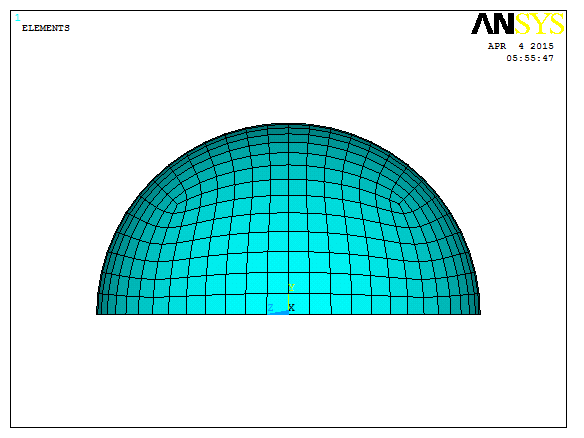
Figure 2. Meshed shell model generated in ANSYS APDL.
3. Finite Element Modeling in ANSYS APDL
3.1 Modeling Procedure
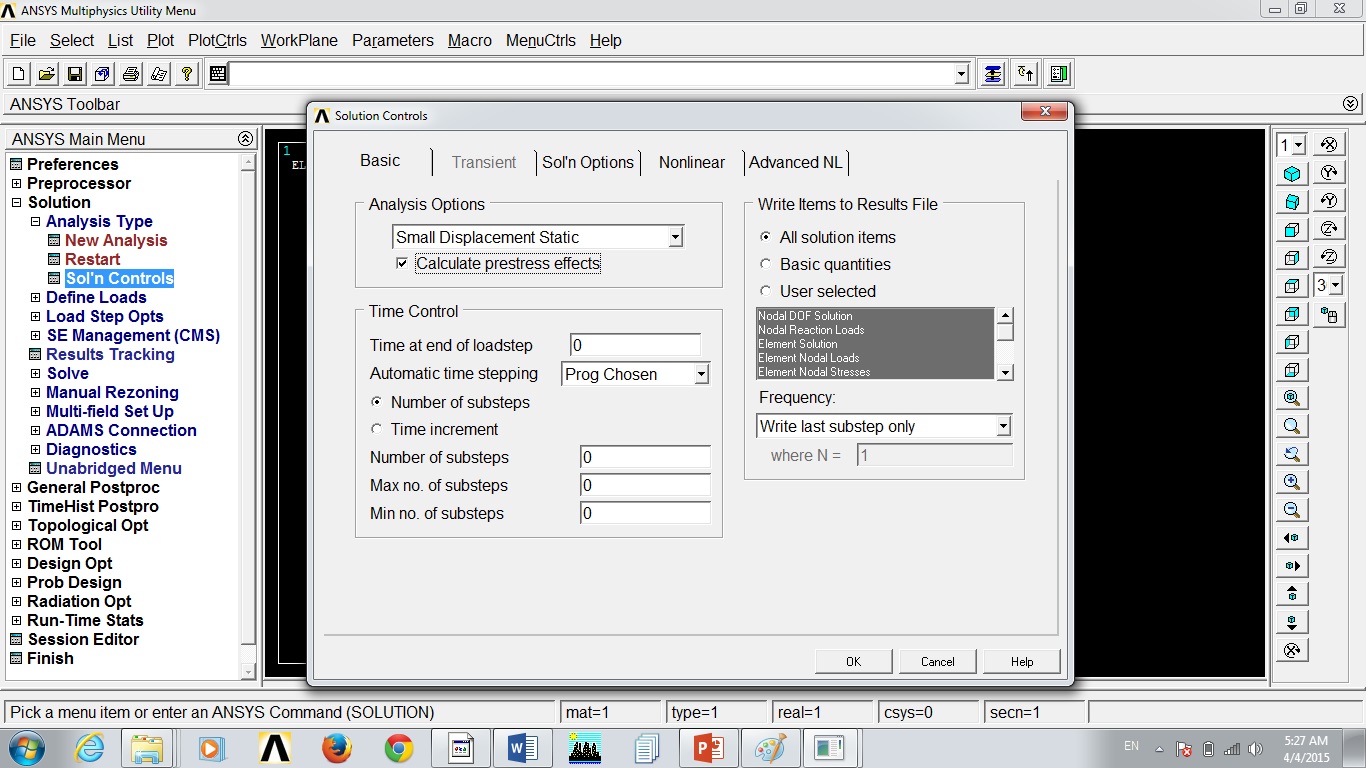
The finite element model is created through a sequence of APDL commands that automate the complete modeling process.
Hemispherical Dome Analysis in ANSYS APDL
The principal modeling stages include:
- Definition of shell element type
- Material property assignment
- Geometric parameter definition
- Parametric generation of dome geometry
- Automatic mesh generation
- Application of boundary conditions
- Uniform pressure loading
- Linear static solution
- Post-processing of numerical results
Because the entire model is script-based, users can easily modify dimensions, material properties, shell thickness, and loading conditions without rebuilding the model manually.
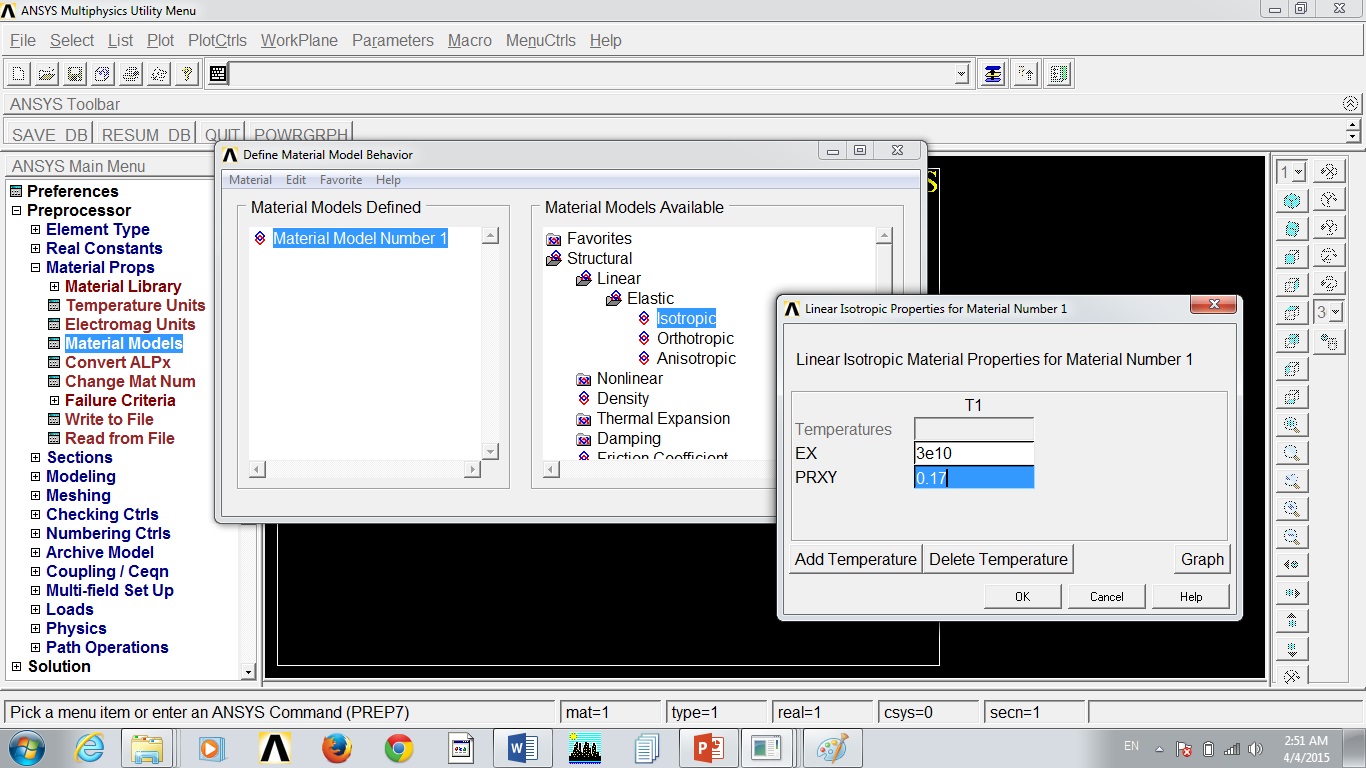
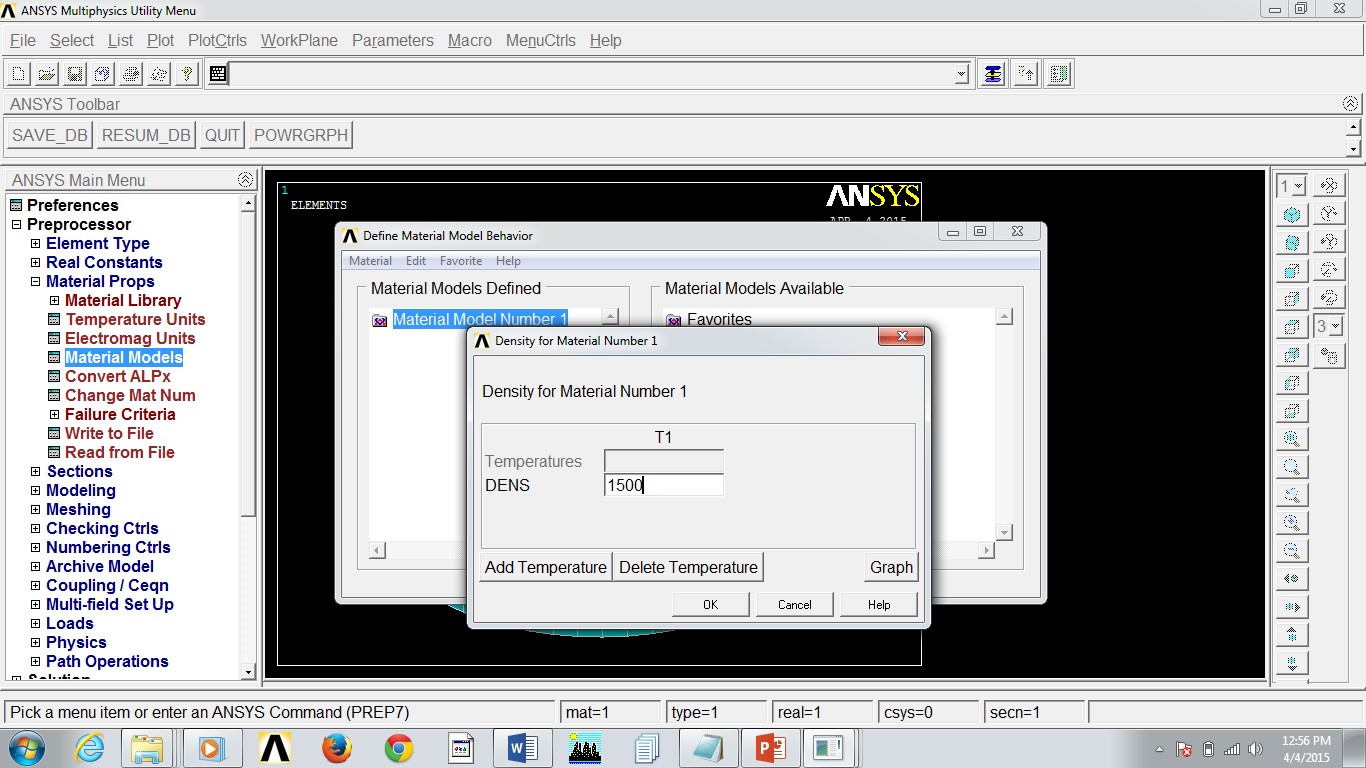
The dome is assumed to be fabricated from structural steel with linear elastic material behavior.
Typical material properties include:
- Young’s Modulus
- Poisson’s Ratio
- Material Density
These properties accurately represent the elastic response of conventional steel structures subjected to service loading conditions.
3.3 Boundary Conditions and Loading
The circular edge of the hemispherical dome is fully restrained to simulate a rigid support condition.
A uniformly distributed pressure is applied over the external shell surface to investigate the structural response under static loading.
The numerical analysis evaluates:
- Global deformation
- Stress distribution
- Structural stiffness
- Load transfer through the shell surface
4. Numerical Results
The finite element analysis provides a comprehensive understanding of the structural behavior of the hemispherical shell.
Typical numerical outputs include:
- Total deformation contours
- Von Mises stress distribution
- Principal stress contours
- Shell displacement pattern
The stress distribution indicates that membrane stresses dominate the structural response, while localized stress concentrations appear near the supported boundary.
The deformation pattern follows the expected behavior of thin shell structures under uniform pressure, demonstrating smooth displacement contours over the dome surface.
5. Conclusion
This educational project demonstrates the complete finite element modeling procedure of a hemispherical steel dome using ANSYS APDL.
The study highlights the advantages of APDL scripting for creating fully parametric shell models that can be efficiently modified for different structural configurations. The numerical results illustrate the characteristic behavior of dome structures under uniformly distributed pressure and provide valuable insight into shell stress distribution and deformation mechanisms.
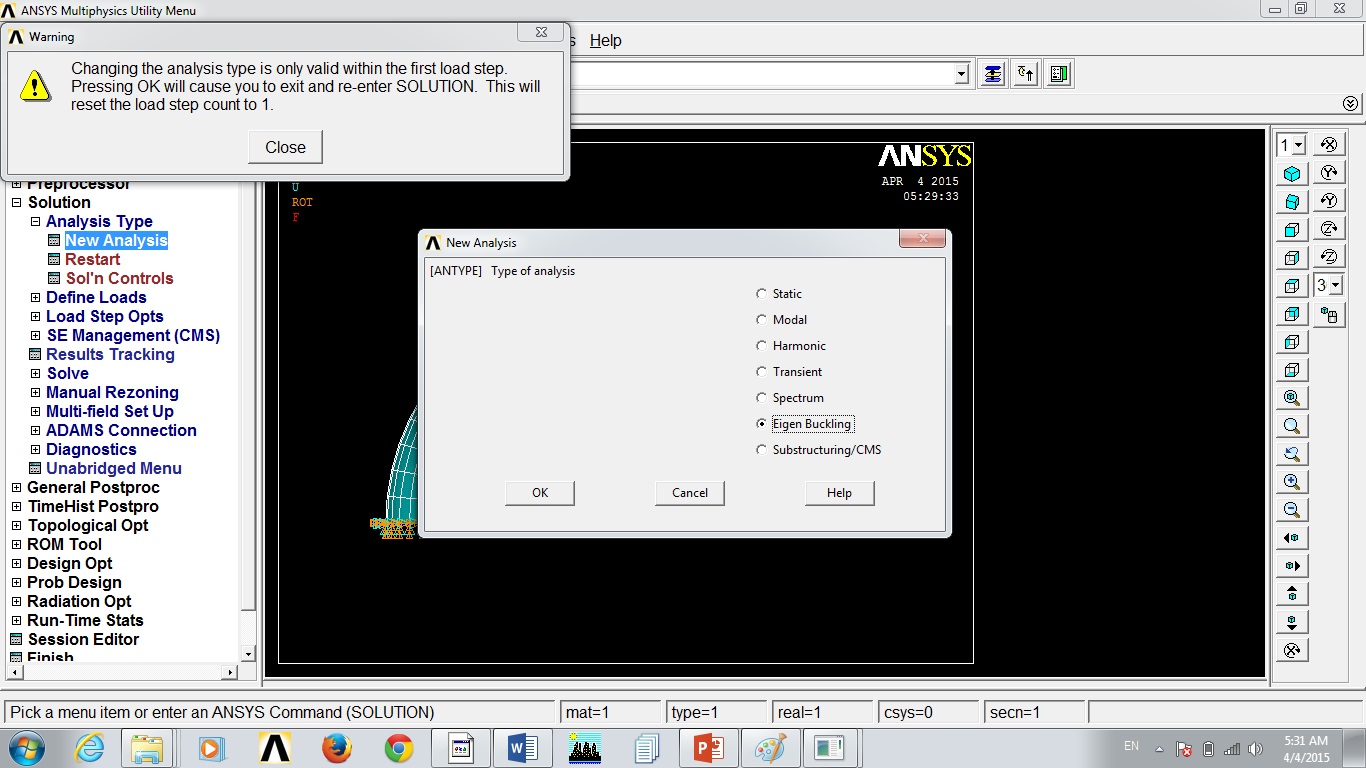
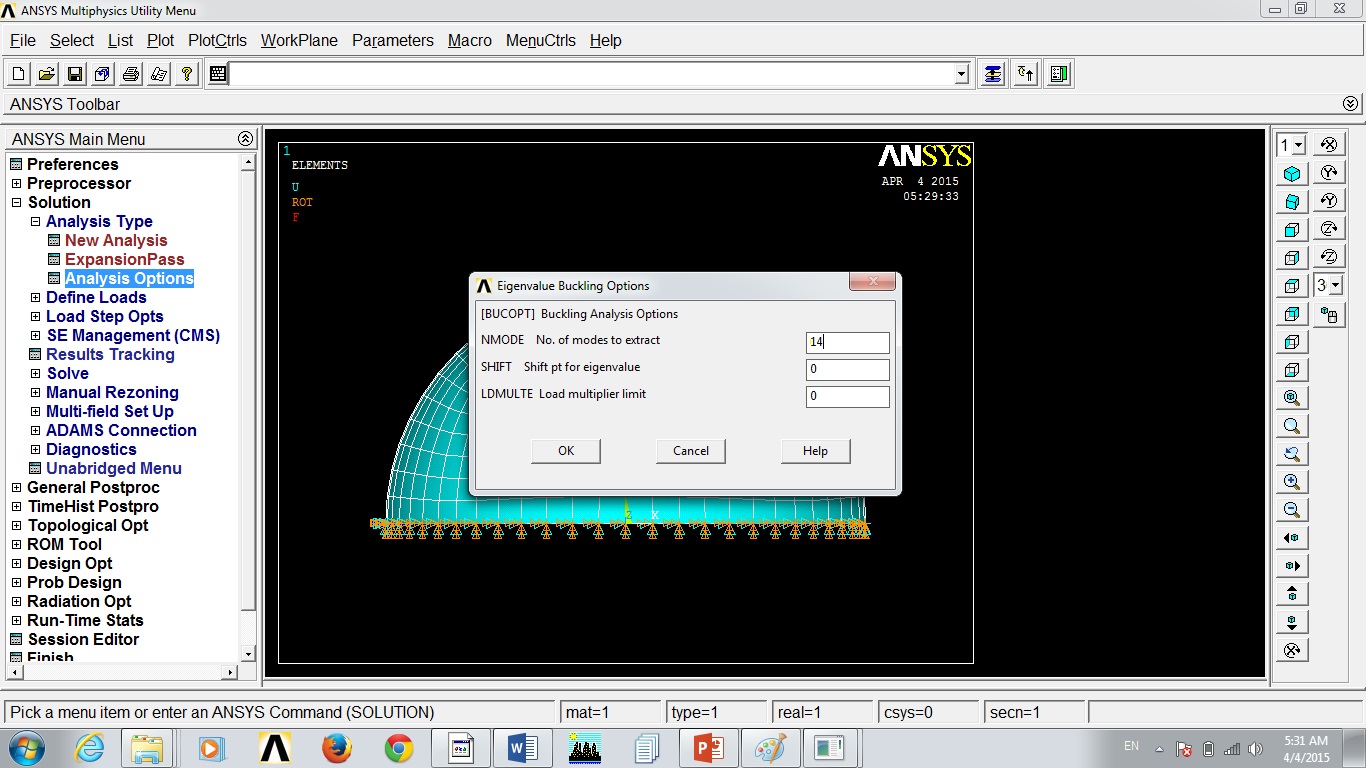
This project serves as a practical introduction to shell finite element modeling and can be used as a foundation for more advanced studies involving nonlinear analysis, buckling behavior, dynamic response, or optimization of shell structures.
References
- ANSYS® Mechanical APDL Documentation. ANSYS Inc.
- Timoshenko, S. P., & Woinowsky-Krieger, S. Theory of Plates and Shells. McGraw-Hill.
- Ugural, A. C. Stresses in Plates and Shells. McGraw-Hill.
- ASME Boiler and Pressure Vessel Code, Section VIII.
FAQ
What is the objective of this project?
To demonstrate the finite element modeling and structural analysis of a hemispherical shell using ANSYS APDL.
Which ANSYS element is used?
A shell finite element is employed for modeling the dome structure.
Is the APDL source code included?
Yes. The complete APDL source code is included with the project package.
Is the project suitable for beginners?
Yes. The project is specifically designed as an educational example for students learning finite element modeling.
Can this model be extended?
Yes. The parametric APDL model can easily be modified for different geometries, shell thicknesses, loading conditions, and advanced nonlinear analyses.
Relatet Ansys Project
Reinforced Concrete Frame Modeling in ANSYS APDL
Step By Step Modeling of Hemispherical Dome Analysis in ANSYS APDL