

Table of Contents
- Introduction if Steel Jacket RC Column
- Experimental Specimen Specifications
2.1 Geometric Properties
2.2 Material Properties
2.3 Steel Jacket Configuration
2.4 Loading System
2.5 Experimental Results
- Finite Element Modeling (ANSYS APDL)
3.1 Overview of ANSYS APDL
3.2 Modeling Procedure (Step-by-Step)
- Results Comparison
4.1 Quantitative Comparison
- Conclusion
References of Steel Jacket RC Column
FAQ
Related Validation Projects
1. Introduction
This report presents the validation of a nonlinear finite element model developed to simulate the structural behavior of reinforced concrete (RC) columns strengthened using external steel jacketing. The objective of this study is to verify the numerical accuracy of the developed ANSYS APDL model by comparing its structural response with experimental laboratory results reported in the reference study.
Steel Jacket RC Column
Steel jacketing is one of the most effective strengthening techniques for existing reinforced concrete columns subjected to increased service loads, seismic upgrading, or rehabilitation of deteriorated structures. By providing external confinement, steel jackets significantly improve the load-carrying capacity, ductility, stiffness, and energy dissipation capacity of reinforced concrete members.
Steel Jacket RC Column
The validation procedure compares the numerical and experimental responses in terms of axial load capacity, deformation characteristics, failure mechanisms, and nonlinear structural behavior. A close agreement between the numerical predictions and laboratory observations confirms the reliability of the developed finite element model and demonstrates its suitability for future parametric investigations.
Steel Jacket Strengthened RC Column FEM Validation
External steel jacketing enhances the confinement of concrete, delays crack propagation, improves post-yield behavior, and increases the overall structural performance of reinforced concrete columns. Accurate numerical simulation of this strengthening technique requires detailed representation of concrete nonlinear behavior, reinforcing steel, steel jacket components, and their interaction throughout the loading process.
In this validation project, the complete numerical model has been developed entirely using ANSYS Parametric Design Language (APDL). The finite element model reproduces the experimental specimen, including concrete core, internal reinforcement, and external steel jacket configuration. The obtained numerical results demonstrate excellent agreement with laboratory observations, confirming the effectiveness of the adopted modeling strategy.
2. Experimental Specimen Specifications
To perform a reliable validation study, a well-documented laboratory investigation on reinforced concrete columns strengthened with steel jackets was selected. The experimental research provides complete information regarding specimen geometry, reinforcement details, material properties, strengthening configuration, loading conditions, and measured structural response.
The experimental results serve as the benchmark for evaluating the accuracy of the finite element model developed in ANSYS APDL.
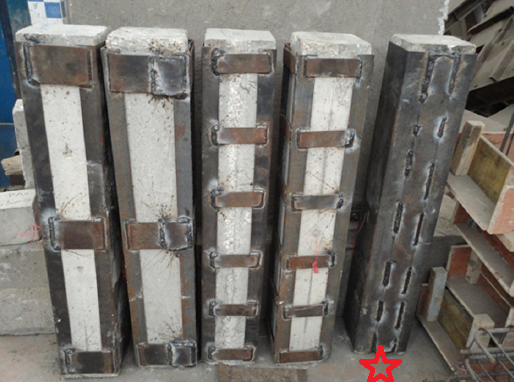
Figure 1. Experimental test specimen.
2.1 Geometric Properties
The experimental specimen consists of a reinforced concrete column strengthened using an external steel jacketing system.
The laboratory specimen includes:
- Reinforced concrete column
- Longitudinal reinforcing bars
- Transverse reinforcement (stirrups)
- External steel jacket
- Loading plates
- Support plates
The complete specimen dimensions, reinforcement arrangement, and steel jacket configuration are reproduced in the finite element model according to the published experimental data.
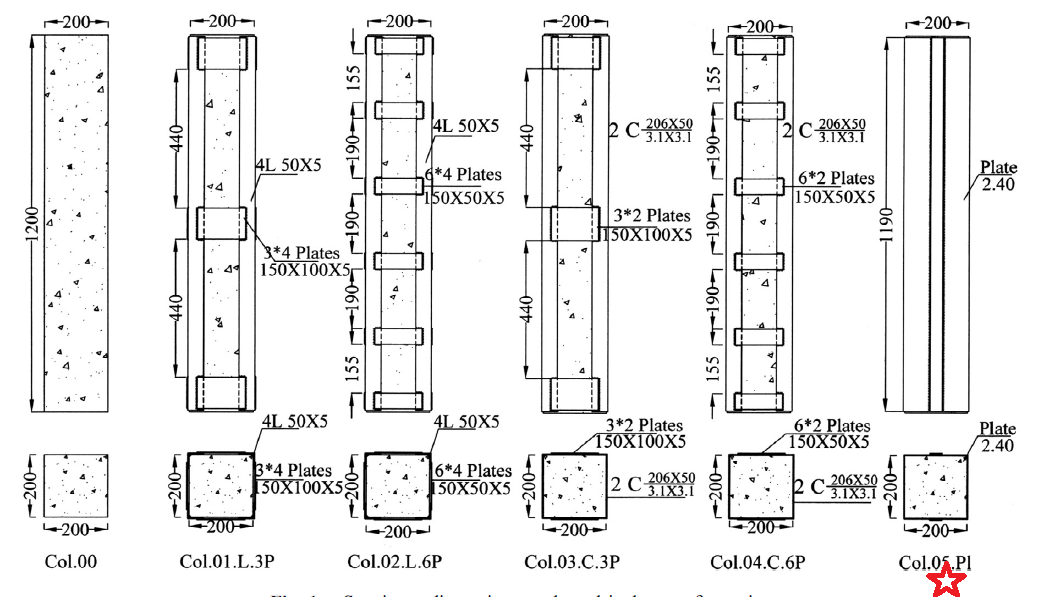
Figure 2. Dimensions and reinforcement details of the experimental specimen.
2.2 Material Properties
The numerical model employs experimentally measured material properties reported in the reference paper.
The material models include:
- Nonlinear concrete behavior
- Elastic-plastic reinforcing steel
- Structural steel jacket
- Material properties corresponding to laboratory tensile and compression tests
The nonlinear constitutive models accurately represent concrete cracking, reinforcement yielding, and steel jacket behavior throughout the loading history.
2.3 Steel Jacket Configuration
The strengthening system consists of external steel jacket components attached around the reinforced concrete column to provide additional confinement.
The steel jacket increases:
- Axial load capacity
- Structural stiffness
- Concrete confinement
- Ductility
- Failure resistance
The geometry and thickness of the steel jacket are modeled according to the experimental specimen.
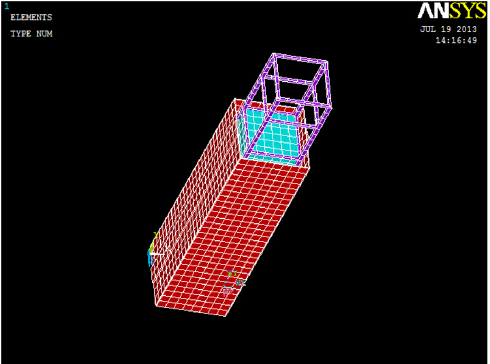
Figure 3. Steel jacket configuration.
2.4 Loading System
The experimental specimen is subjected to monotonic axial compression using a hydraulic testing machine.
Boundary conditions and loading procedure adopted in the finite element model follow the laboratory setup as closely as possible.
The numerical loading procedure reproduces:
- Bottom support constraints
- Top loading plate
- Incremental nonlinear loading
- Large displacement effects
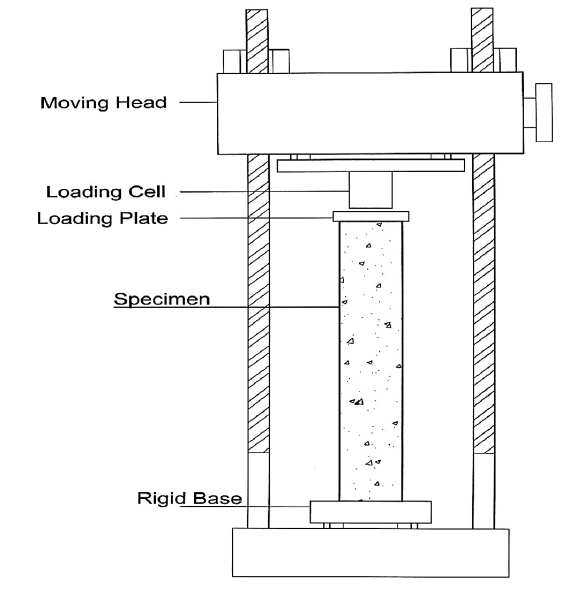
Figure 4. Experimental loading system.
2.5 Experimental Results
The primary response parameter used for validation is the axial load–displacement relationship obtained from laboratory testing.
Additional observations include:
- Crack development
- Concrete crushing
- Reinforcement yielding
- Steel jacket contribution
- Ultimate load capacity
The experimental response serves as the reference for evaluating the numerical model.
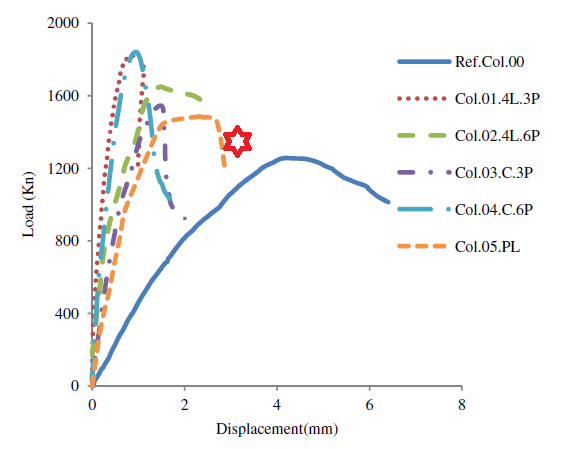
Figure 5. Experimental Load–Displacement Curve.
3. Finite Element Modeling (ANSYS APDL)
3.1 Overview of ANSYS APDL
The complete finite element model was developed using ANSYS Parametric Design Language (APDL).
Compared with graphical modeling environments, APDL provides significantly greater flexibility for nonlinear structural simulations by allowing complete control over geometry generation, material definition, meshing strategy, solution controls, and post-processing operations.
The entire modeling workflow included in this package can be reproduced using the supplied APDL source code. Detailed implementation procedures are also covered in the corresponding ANSYS APDL tutorial videos available on our website.
Advantages of APDL
- Fully parametric scripting
- Automated geometry generation
- Accurate nonlinear material definition
- Complete control of convergence parameters
- Reproducible numerical simulations
- Efficient parametric studies
3.2 Modeling Procedure (Step-by-Step)
The numerical model reproduces the experimental specimen using appropriate nonlinear finite elements.
Finite Elements Used
| Structural Component | ANSYS Element |
| Concrete | SOLID65 |
| Longitudinal Reinforcement | LINK8 |
| Transverse Reinforcement | LINK8 |
| Steel Jacket | SOLID45 |
The modeling procedure consists of:
- Definition of nonlinear material properties
- Creation of concrete geometry
- Modeling of longitudinal reinforcement
- Modeling of transverse reinforcement
- Generation of external steel jacket
- Mesh generation
- Boundary condition definition
- Incremental nonlinear loading
- Nonlinear solution
- Post-processing of numerical results
The nonlinear concrete model captures cracking and crushing behavior, while the reinforcing steel and steel jacket are represented using elastoplastic material models consistent with the experimental investigation.
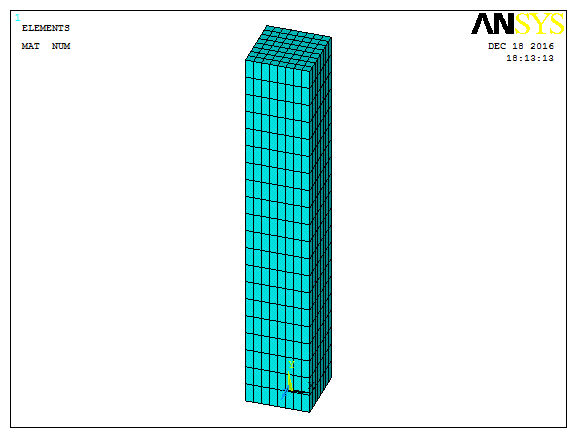
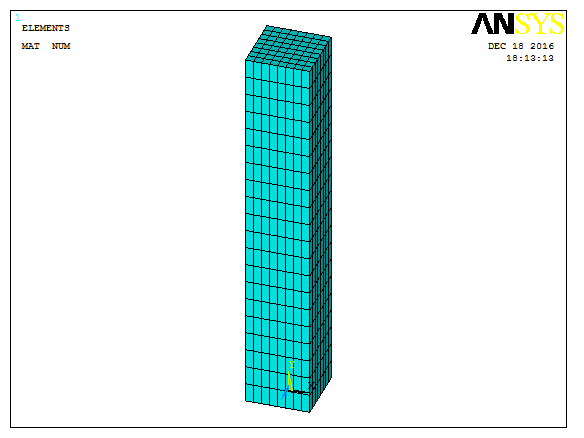
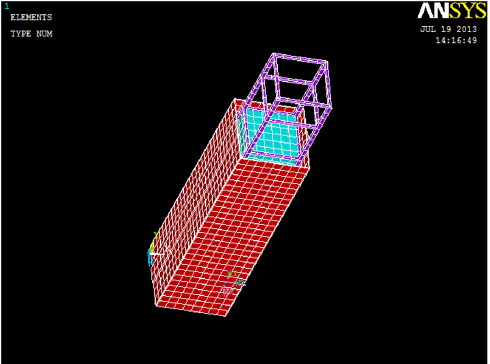
Figure 6. Finite Element Model in ANSYS APDL.
4. Results Comparison
4.1 Quantitative Comparison
The comparison between experimental and numerical results demonstrates excellent agreement throughout the loading history.
The developed finite element model successfully predicts:
- Initial stiffness
- Yielding behavior
- Ultimate load capacity
- Post-yield response
- Failure mechanism
The load–displacement curves obtained from ANSYS APDL closely follow the experimental response, confirming the accuracy of the adopted modeling methodology.
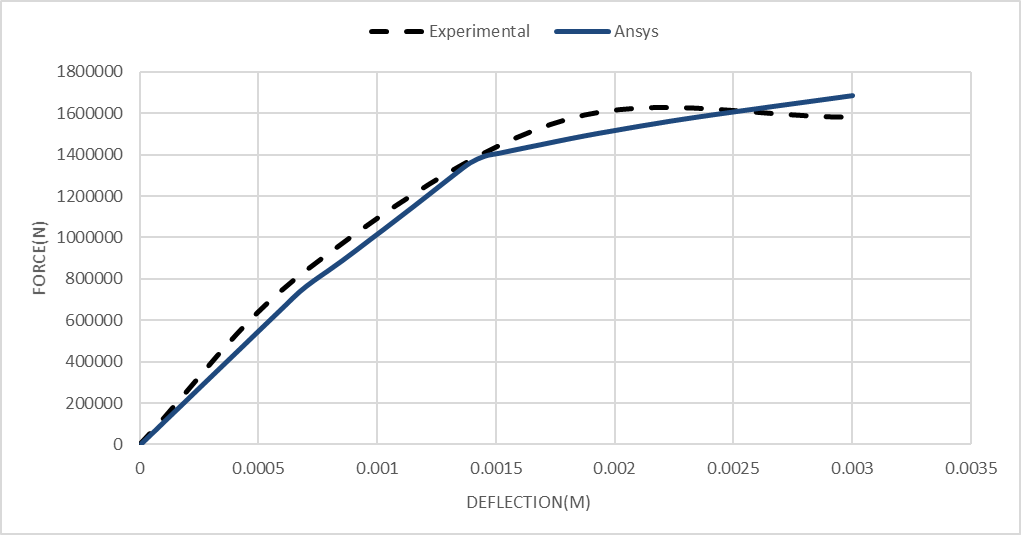
Figure 8. Experimental vs Numerical Load–Displacement Curve.
| Comparison Parameter | Experimental | ANSYS APDL | Error (%) |
| Ultimate Load | 1580 | 1684 | 6.5 |
A low percentage error confirms that the selected finite element types, nonlinear material models, and numerical assumptions provide an accurate representation of the laboratory specimen.
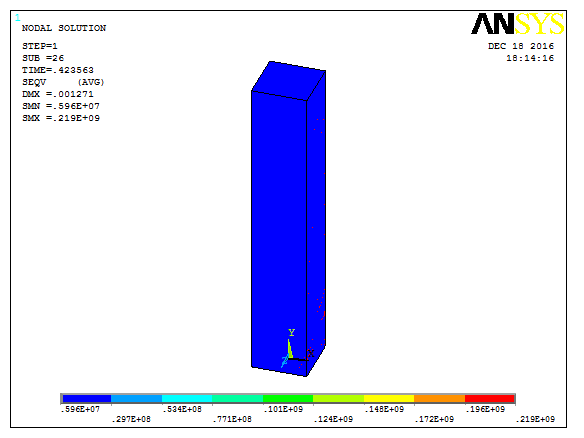
Figure 7. Output of Analysis
5. Conclusion
The developed ANSYS APDL model accurately reproduces the nonlinear behavior of reinforced concrete columns strengthened with external steel jackets. The numerical predictions show close agreement with the experimental observations regarding stiffness, load-carrying capacity, deformation characteristics, and failure mechanism.
The successful validation demonstrates that the adopted modeling strategy—including the use of SOLID65 for concrete, LINK8 for reinforcing bars, and SOLID45 for the steel jacket—is suitable for nonlinear structural analysis of strengthened reinforced concrete members.
The validated model can therefore be confidently employed for future parametric studies, optimization of strengthening techniques, and advanced nonlinear structural simulations.
References
FAQ
What is Steel Jacket RC Column FEM Validation?
This project validates a nonlinear ANSYS APDL model of reinforced concrete columns strengthened with external steel jacketing against laboratory test results.
Which ANSYS elements are used?
Concrete is modeled using SOLID65, reinforcement using LINK8, and the external steel jacket using SOLID45.
Is the APDL source code included?
Yes. The package contains the complete APDL source code together with the engineering report.
Is the reference paper included?
Yes. The original experimental study is included for comparison and validation purposes.
Can this validated model be used for research?
Yes. The validated model provides a reliable basis for further nonlinear analyses and parametric investigations of steel-jacketed reinforced concrete columns.