

Steel EBF FEM Validation in ANSYS APDL presents a validated nonlinear finite element model of a full-scale steel eccentrically braced frame (EBF) subjected to cyclic displacement-controlled loading.
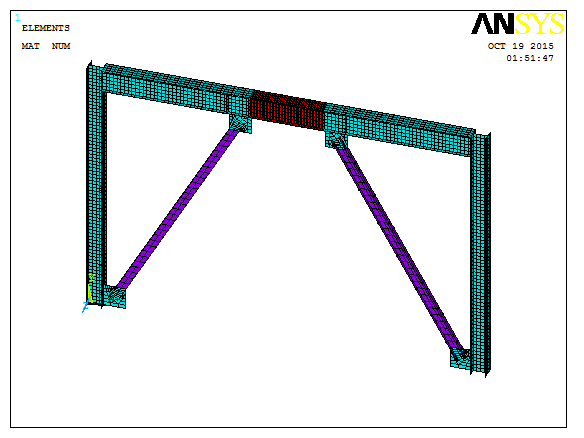
Steel EBF Validation in ANSYS APDL is performed using a fully parametric ANSYS APDL model developed to reproduce the experimental behavior of a full-scale eccentrically braced frame (EBF) under cyclic displacement-controlled loading.
Steel EBF Validation in ANSYS APDL | Cyclic Analysis
1. Introduction
Steel EBF Validation in ANSYS APDL (EBFs) are among the most efficient seismic structural systems because they combine the high stiffness of concentrically braced frames with the excellent ductility of moment-resisting frames. During strong earthquakes, the inelastic deformation is intentionally concentrated within the link beam, allowing the remaining structural members to remain essentially elastic while dissipating a significant amount of seismic energy.Steel EBF Validation in ANSYS APDL | Cyclic Analysis
This project presents the finite element validation of a full-scale steel EBF specimen experimentally tested by Maalek et al. under cyclic displacement-controlled loading. The numerical model has been completely developed using ANSYS APDL with a fully parametric programming strategy. Unlike conventional finite element models, every geometric dimension, section property, material characteristic, and structural component can be modified directly through user-defined parameters, making the model suitable for advanced parametric investigations and research applications.
The primary objective of this validation study is to reproduce the experimental cyclic behavior of the EBF system and evaluate the capability of the numerical model in predicting the nonlinear response, hysteretic behavior, stress distribution, and yielding mechanism of the structural members.
- !!!!!!!!!!!!!!!!!!!!!!!!!!!!!!!!!!!!!!!!!!!!!!!!!!!!!!!!!!!!!!!!!!!!!!!!!!!!!!!!!!!!!!!!!!!!!
- *SET,twc,.0085
- *SET,tfc,.014
- *SET,twb,.0066
- *SET,tfb,.0102
- *SET,twbr,.018
- *SET,tfbr,.016
- *SET,tt,.05
- *SET,HC,.18
- *SET,HB1,.3
- *SET,H,2.9
- *SET,HB2,.27
- *SET,BC,.18
- *SET,BB,.135
- *SET,B1,1.3
- *SET,B2,1.225
- *SET,B3,.3
- *SET,B4,.75
- *SET,HBR,.23
- *SET,BBR,.1
- *SET,M1,2
- *SET,M2,4
- *SET,M3,20
- *SET,M4,2
- *SET,M5,4
- *SET,M6,2
- *SET,M7,1
- *SET,M51,5
- *SET,M52,5
- *SET,M53,4
- *SET,M54,6
- *SET,M8,4
- *SET,M9,20
- *SET,M10,2
- *AFUN,DEG
- *SET,Z,ATAN((HB1/2+H-B3/2)/(B1+B2+B3/2-HB1/2))
- *SET,LL,sqrt((HB1/2+H-B3/2)*(HB1/2+H-B3/2)+(B1+B2+B3/2-HB1/2)*(B1+B2+B3/2-HB1/2))
- !!!!!!!!!!!!!!!!!!!!!!!!!!!!!!!!!!!!!!!!!!!!!!!!!!!!!!!!!!!!!!!!!!!!!!!!!!!!!!!!!!!!!!!!!!!!!
2. Experimental Specimen
The reference experimental program consists of a full-scale single-story, single-bay eccentrically braced steel frame subjected to quasi-static cyclic lateral loading.
Unlike many previous investigations that focused only on isolated link beams, the experimental specimen included the complete structural system, allowing the interaction between the link beam, braces, columns, beam segments, and welded connections to be investigated simultaneously.
The structural configuration consists of:
- Steel columns
- Steel beam with eccentric link
- Diagonal steel braces
- Welded brace-to-beam connections
- Web stiffeners
- Lateral supports
The loading protocol follows displacement-controlled cyclic loading to evaluate the global seismic performance and energy
dissipation capacity of the frame.
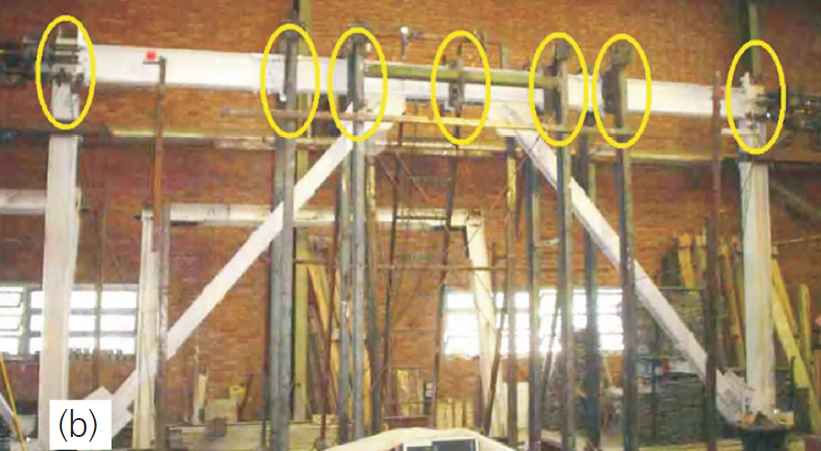
Figure 1. Experimental configuration of the tested EBF specimen
3. Parametric APDL Modeling
One of the most significant features of this project is the complete implementation using ANSYS Parametric Design Language (APDL).
Instead of manually creating the finite element model, the entire structural geometry is generated automatically through user-defined parameters.
The APDL source code controls numerous structural variables, including:
- Column dimensions
- Beam dimensions
- Brace dimensions
- Link length
- Story height
- Bay length
- Plate thicknesses
- Web stiffener geometry
- Flange thicknesses
- Mesh parameters
- Material assignment
As a result, users can automatically generate numerous EBF configurations simply by modifying a limited number of variables at the beginning of the APDL program without rebuilding the numerical model.
This capability makes the model highly suitable for optimization studies, sensitivity analyses, and academic research involving different structural configurations.
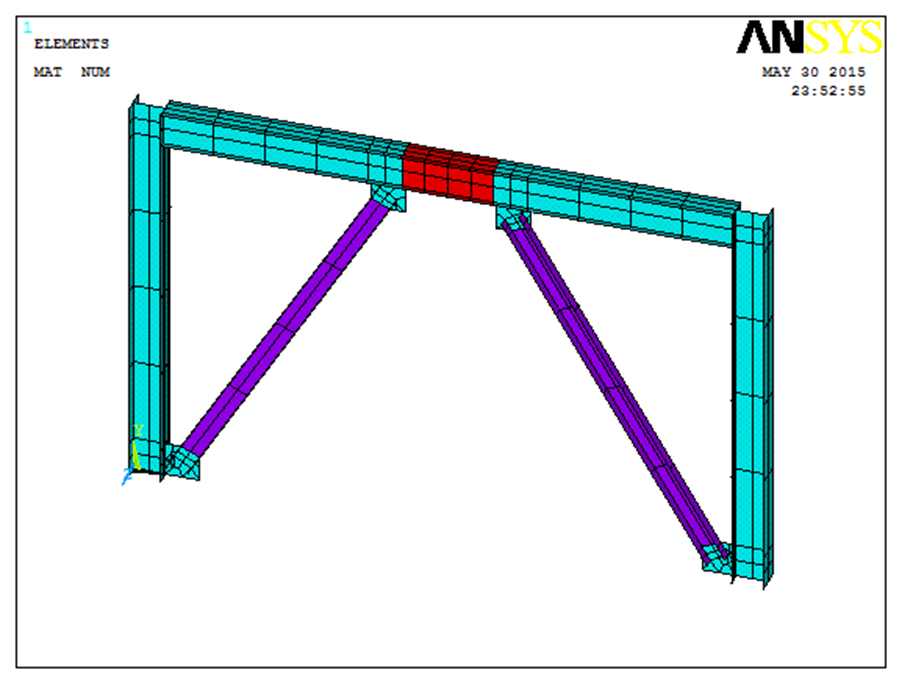
Figure 2. Parametric model generation
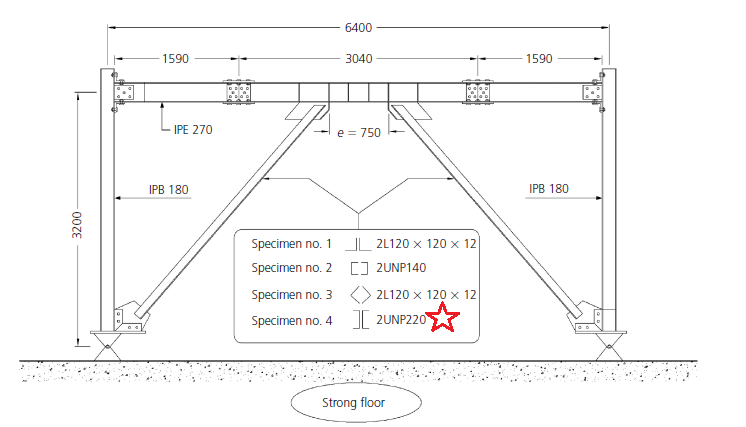
Figure 3. User-defined geometric parameters
4. Finite Element Modeling
The complete EBF system has been modeled using SHELL43 finite elements.
Unlike simplified beam-element approaches, shell elements provide a more realistic representation of local plate behavior, web deformation, flange yielding, and stress concentrations around the link region.
The finite element model includes:
- Columns
- Beams
- Link beam
- Braces
- Web stiffeners
- Connection plates
The shell-based formulation enables accurate simulation of local nonlinear behavior while maintaining computational efficiency.
A refined mesh has been employed in the link region where significant plastic deformation is expected during cyclic loading.
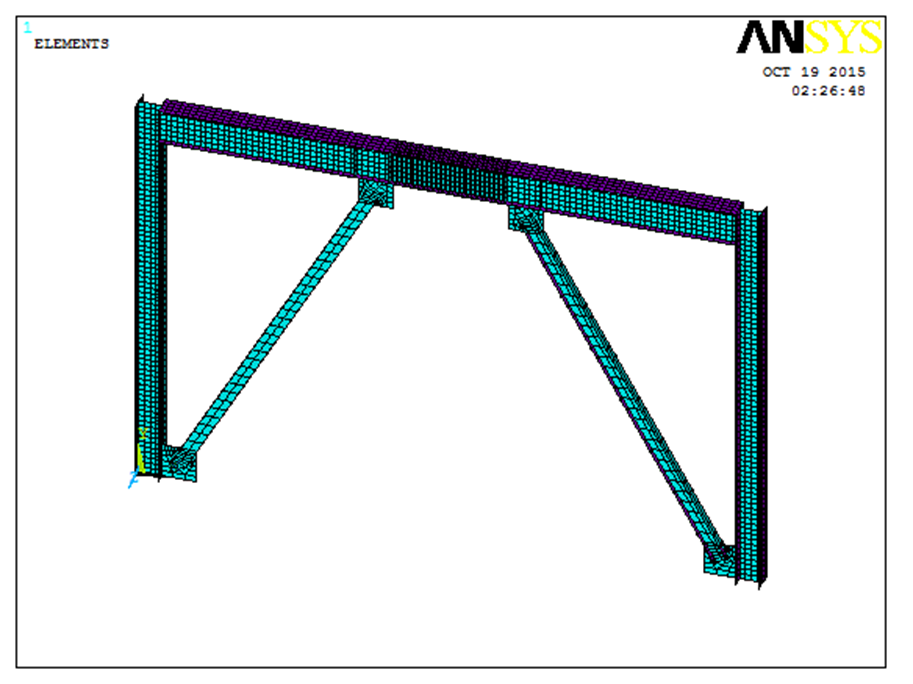
Figure 4. Finite element mesh
5. Material Modeling
Separate nonlinear material models have been assigned to each structural component.
Steel EBF FEM Validation in ANSYS APDL
Independent material definitions are provided for:
- Columns
- Beams
- Braces
- Link beam
Each material follows a multilinear isotropic hardening constitutive model derived from the mechanical properties reported in the experimental study.
This independent material assignment allows researchers to investigate the influence of different steel grades or yielding characteristics on the global structural response without modifying the finite element topology.
6. Nonlinear Cyclic Analysis
The numerical model has been analyzed under displacement-controlled cyclic loading following the experimental loading protocol.
Steel EBF FEM Validation in ANSYS APDL
The nonlinear solution captures the complete hysteretic response of the EBF system, including:
- Initial elastic behavior
- Link yielding
- Plastic deformation
- Stiffness degradation
- Energy dissipation
- Residual deformation
Special attention has been paid to the nonlinear response of the eccentric link, which serves as the primary energy-dissipating component within the structural system.
The shell-based finite element model successfully reproduces the gradual development of plasticity and the redistribution of stresses during repeated loading cycles.
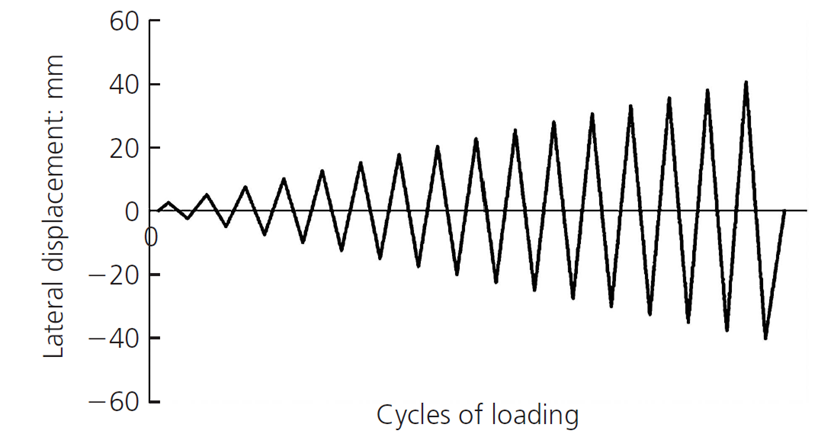
Figure 6. Loading protocol
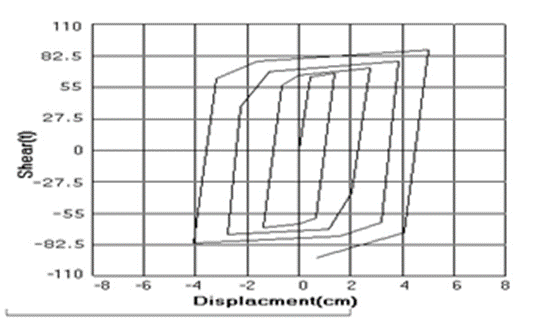
Figure 7. Hysteresis loops
7. Validation Results
The numerical results demonstrate excellent agreement with the experimental observations.
Steel EBF FEM Validation in ANSYS APDL
The APDL model accurately reproduces:
- Global hysteretic behavior
- Initial stiffness
- Yielding sequence
- Plastic hinge development
- Stress concentration within the link
- Overall deformation pattern
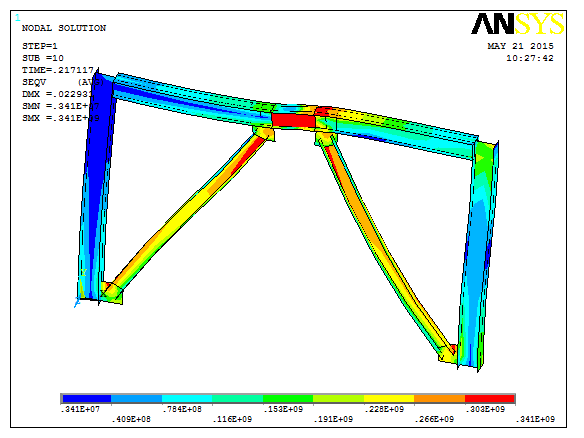
Stress contours indicate that plastic deformation is primarily concentrated within the eccentric link, while braces and columns remain largely elastic, consistent with the intended seismic design philosophy of EBF systems.
The agreement between the experimental and numerical responses confirms the reliability of the developed finite element model for nonlinear seismic simulations.
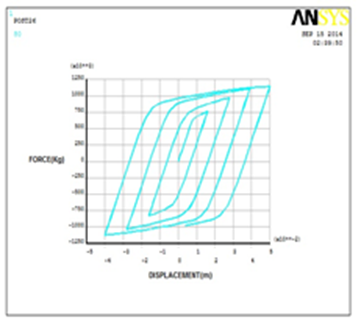
Figure 8. Experimental versus numerical response
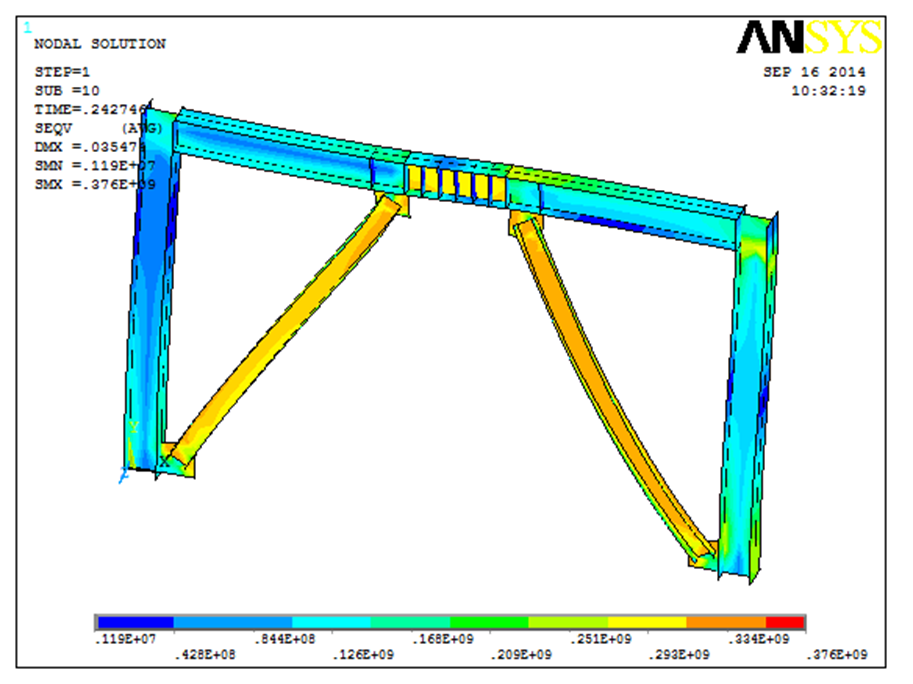
Figure 9. Von Mises stress distribution
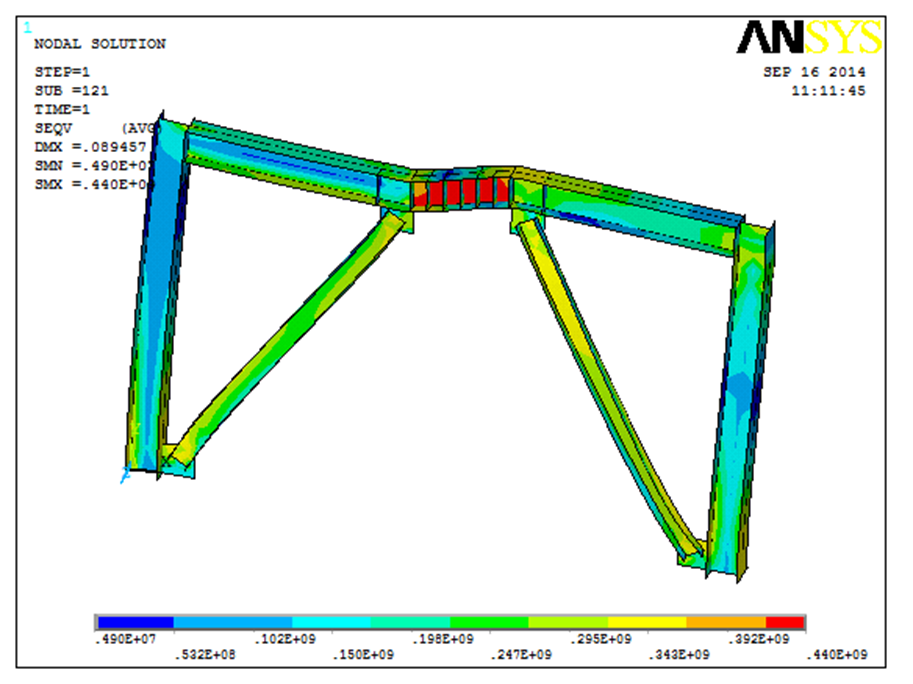
Figure 10. Plastic deformation of the link
8. Educational Resources
The complete APDL source code included in this package has been fully organized and documented to facilitate learning and future development.
In addition to the numerical model, dedicated educational videos available on our website explain:
- Parametric APDL programming
- Shell element modeling
- Nonlinear material definition
- Cyclic displacement loading
- Solution controls
- Post-processing of hysteresis curves
- Stress evaluation
- Parametric modifications
These educational resources enable users to understand not only the final model but also the methodology behind developing advanced nonlinear finite element simulations from scratch.
9. Conclusion
This project presents a validated nonlinear finite element model of a full-scale steel eccentrically braced frame developed entirely in ANSYS APDL.Steel EBF FEM Validation in ANSYS APDL
The combination of shell-element modeling, independent nonlinear material definitions, displacement-controlled cyclic analysis, and fully parametric programming provides a powerful numerical framework for investigating the seismic behavior of EBF systems.
Beyond reproducing the experimental results with high accuracy, the developed APDL program offers exceptional flexibility for conducting future parametric studies by allowing rapid modification of geometric properties, material characteristics, and structural configurations without reconstructing the finite element model.
This package is therefore suitable for graduate students, researchers, and structural engineers seeking a reliable and extensible platform for advanced nonlinear seismic analysis of steel eccentrically braced frames.
Reference
Related Project
Concrete Shear Wall in ANSYS APDL
Product Excerpt
This project presents the experimental validation of a full-scale steel eccentrically braced frame (EBF) using ANSYS APDL. The package includes a fully parametric APDL program, shell-element modeling, nonlinear cyclic analysis, independent material definitions, and detailed comparison with published experimental results.