

📑 Table of Contents
📋 Product Overview
📖 Introduction
📊 Validation Results
Introduction
This numerical study employs the Finite Element Method (FEM) within the ANSYS APDL environment to perform a rigorous validation of structural behavior. By systematically developing high-fidelity models, this approach ensures precise correlation between experimental observations and numerical predictions. Utilizing advanced non-linear solvers and parametric scripting, the modeling process captures complex failure mechanisms, enabling a comprehensive verification of structural performance. This methodology establishes a robust framework for assessing the accuracy of computational simulations against laboratory-tested experimental data.
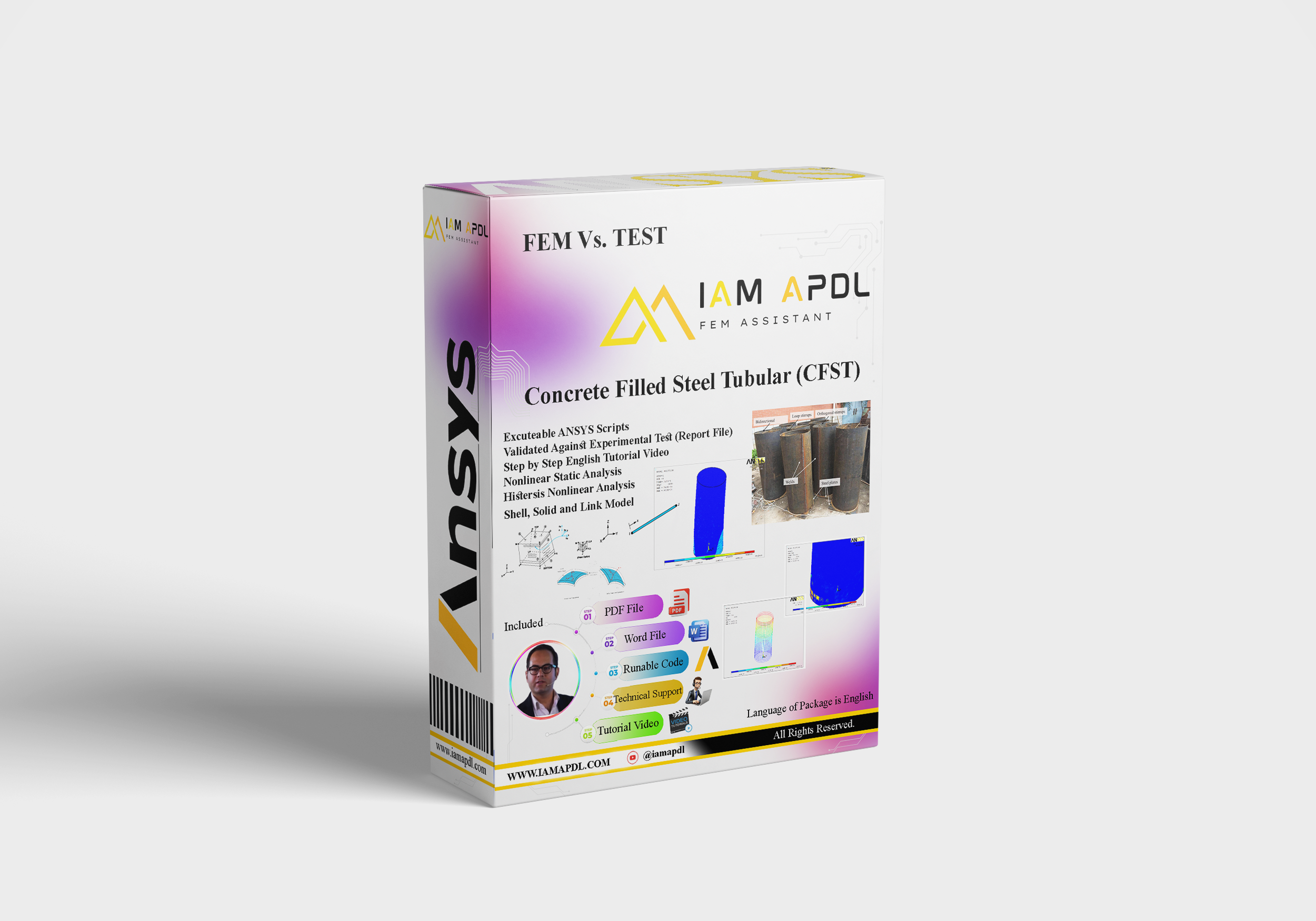
Concrete Filled Steel Tubular in Ansys
Concrete-Filled Steel Tubular (CFST) columns represent an advanced composite structural system that leverages the synergistic effects of both steel and concrete. By enclosing high-strength concrete within a steel tube, the system achieves a high degree of structural efficiency through several mechanisms: the steel tube provides confinement to the concrete core, increasing its compressive strength and ductility, while the concrete prevents the local buckling of the steel shell.
In the context of seismic engineering, CFST columns exhibit exceptional performance due to their enhanced energy dissipation capacity and superior ductility. Unlike conventional reinforced concrete or pure steel sections, CFST members can undergo significant inelastic deformations without the abrupt loss of load-carrying capacity. This high level of confinement ensures a stable hysteresis behavior during cyclic loading, making them an ideal solution for high-rise structures and seismic-resistant frameworks in highly active tectonic zones.
Key Terminology Used
- Synergistic Composite Action
- Enhanced Confinement Mechanism
- Mitigation of Local Buckling
- Superior Seismic Ductility
- Energy Dissipation Capacity
- Stable Cyclic Hysteresis Behavior
2. Experimental Specimen Specifications
2.1 Geometric Properties
The tested specimens were concrete-filled steel tubular (CFST) columns with the following nominal dimensions:
- Diameter (D): 511 mm
- Steel Wall Thickness (t): 4 mm
- Specimen Height (H): 1211 mm
2.2 Material Properties
The steel used in the specimens had a yield stress of Steel plate is 380 MPa. This material property was selected so that the frame members would provide sufficient strength while the shear panel would yield first under cyclic loading.
For Concrete and Rebar Define According Define Steel and Concrete material in ansys Tutorial video in www.iamapdl.com
The material behavior was treated as elastic-plastic, which is appropriate for capturing the inelastic response of the dampers during seismic-type loading.
2.3 Experiment Loading Systems
The experiments were conducted under quasi-static cyclic loading. In this type of test, lateral displacement is applied gradually and repeatedly to simulate earthquake-induced deformation.
Concrete Filled Steel Tubular in Ansys
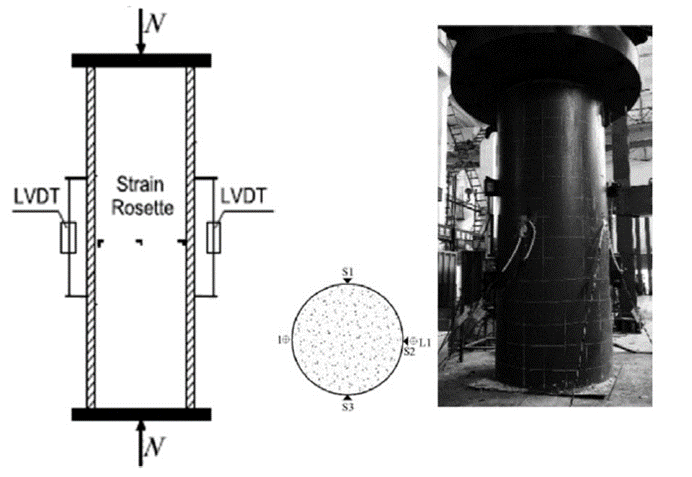
Figure 1: Experiment Loading Systems
2.4 Result of Experiment Test
The key performance characteristic of a Concrete Filled Steel Tubular, as demonstrated by the test control procedures, is the relationship between the story shear and story drift Or Capacity Curve Of Frame.
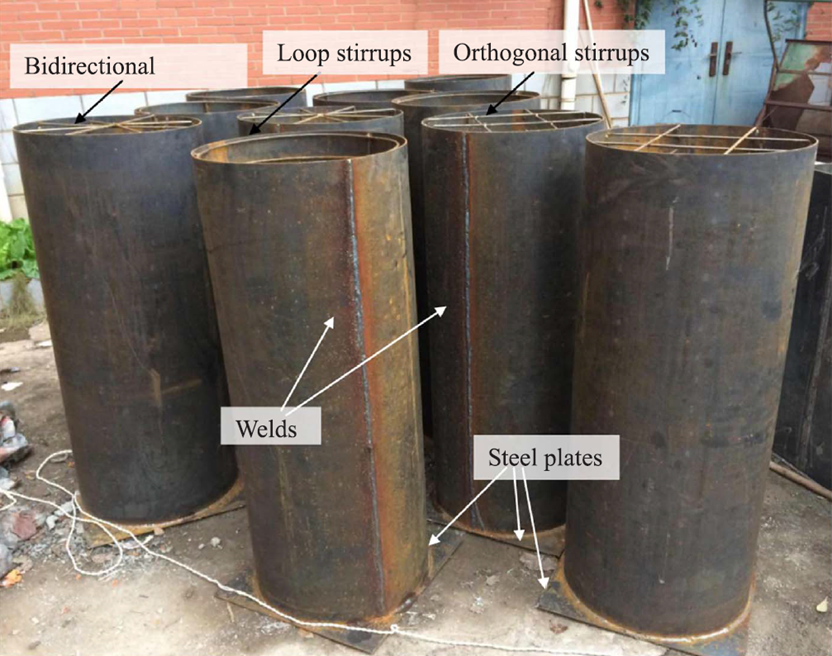
Figure 2: Experiment Specimen Systems
3. Finite Element Modeling (ANSYS APDL)
3.1 Overview of ANSYS APDL
ANSYS Parametric Design Language (APDL) is a powerful scripting language used to automate the finite element analysis process. Unlike the standard GUI, APDL allows for high-precision parametric modeling, which is essential for structural validation. It offers advanced capabilities for defining complex geometries, material behaviors, and loading conditions, ensuring that the numerical model accurately represents the experimental setup.
Concrete Filled Steel Tubular in Ansys
Advantages of using APDL Scripting:
• Automation: Enables seamless iteration of geometry, mesh density, and boundary conditions, supporting complex parametric studies and optimization through scripting.
• Flexibility: Offers precise control over material nonlinearities, advanced contact elements, and custom loading protocols.
Repeatability: Ensures that modeling steps are documented and•
reproducible, reducing human error and crucial for validation studies.
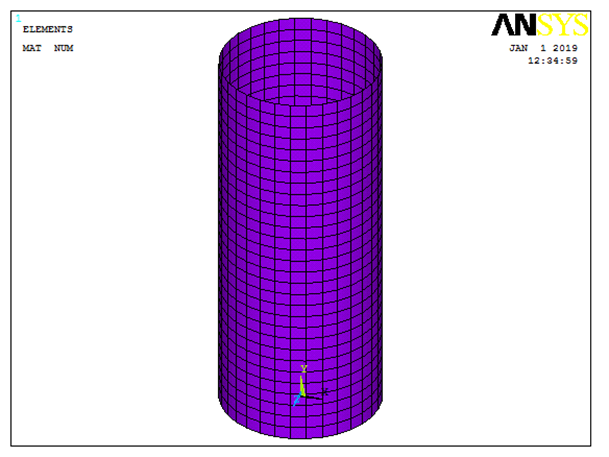
Figure 3: Modeling Experimental Specimen in ANSYS
- Modeling (Step-by-Step)
Step by Step modeling Concrete Filled Steel Tubular in ANSYS
Use 2 Real Constant for Supply Thickness of Element
| Topic | No. Real Constant | Value(m) | |
| Column | Thickness of Plate | 1 | 0.004 |
| Rebar | Area of Spiral confi | 2 | 0.0000264 |
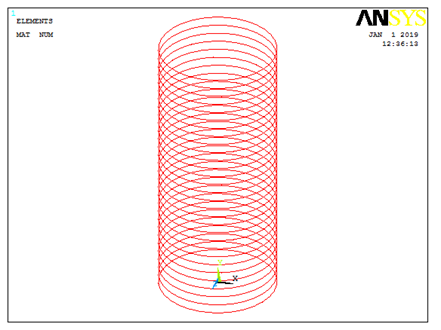
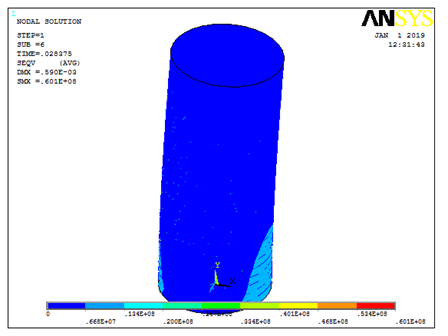
Figure 6: Guide for draw Area by Dimension Method
| Step | Description’s | |
| 1: Element For Beam 2: Element For Column 3: Element For Rebar | 1:SHEEL43[1] 2:Concrete65 3:Link8 | |
| 1: Material For Beam 2: Material For Column 3: Material For Rebar | Material 1 Steel Multilinear Define Material[2] Material 2 Concrete and material 3 is rebar | |
| 3:Modeling | Solid, Area and line Method | |
| 4:Meshing | Quad Mapped | |
| 5:Load, Constraint and Analysis Type | Nonlinear static Analysis by Displacement Control | |
| 6:Result | Plot and Capacity Curve |
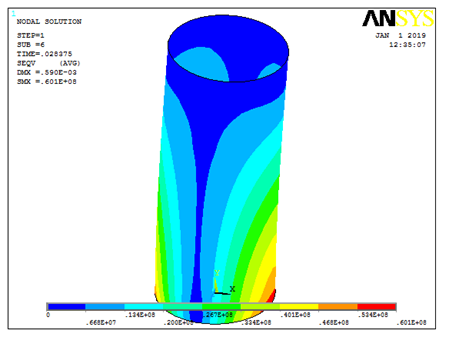
Figure 2: Plot Result after Analysis
4. Results Comparison
4.1 Quantitative Data
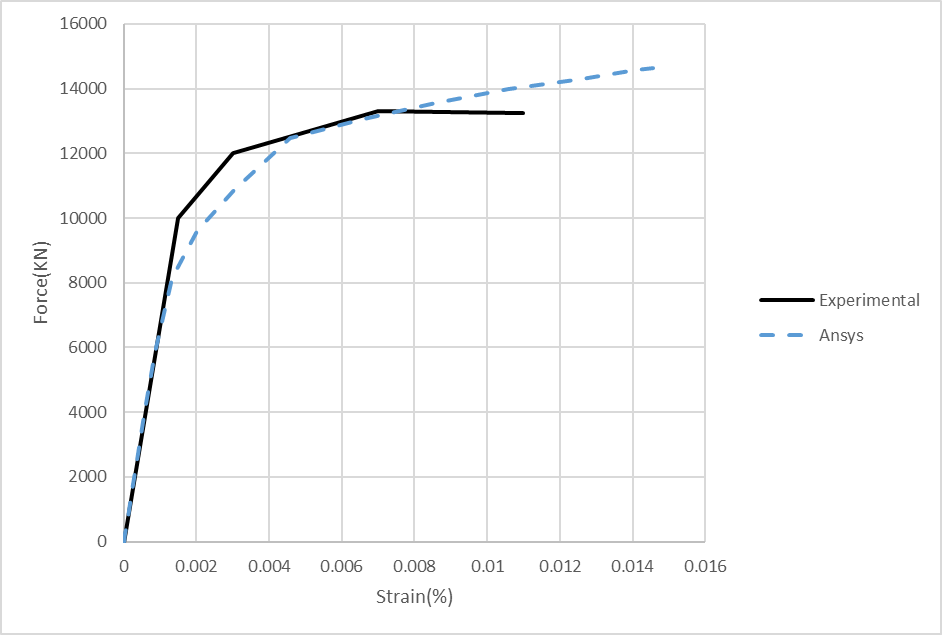
Figure 3: Load-Displacement Curve Comparison Graph
The comparison between the experimental and numerical results indicates that the FE model captures the overall structural response with satisfactory accuracy.
| Comparison Parameter | Experimental | FEA Result | Error[3] |
| Result | (ANSYS) | (%) | |
| Peak Load (KN) | 1401 | 1325 | 7.1 |
Figure 2: Comparison Between FEM and TEST
The load-displacement trend, peak resistance, and deformation characteristics should be evaluated together to determine the validity of the model.
The most critical validation criterion is whether the FE model can capturein Fig 2 and the ductile cyclic response observed experimentally.
5. Conclusion
The numerical results obtained from the ANSYS APDL model show good agreement with the experimental data. The minor discrepancy in the results validates the reliability of the modeling methodology, confirming that the FE model can be effectively used for further parametric studies.
The paper by Park et al. clearly demonstrates that shear panel dampers are an effective seismic energy-dissipation system for steel frames.
The main conclusions are:
- Steel frames with shear panel dampers show much better cyclic behavior than ordinary frames without dampers.
- The shear panel serves as a sacrificial yielding element and protects the main structural members.
- Stiffeners significantly improve the stability of the damper by preventing premature buckling.
- The finite element results are in good agreement with the experimental observations.
- Among the tested specimens, the stiffened shear panel damper specimen (SF-01) had the best overall seismic performance.
In summary, shear panel dampers can be considered a practical and efficient method for improving the seismic resistance of steel structures, especially when stiffeners are used to enhance stability and ductility.
[1] For More Information See “Define ELEMENT in ANSYS” Tutorial Video
[2] For More Information See “Define MATERIAL in ANSYS” Tutorial Video
| Error (%) = | ∣Experimental Result −FEA Result∣ | × | 100 |
| Experimental Result |
Ding, F.-X., Zhu, J., Cheng, S.-S., & Liu, X. (2017). Comparative study of stirrup-confined circular concrete-filled steel tubular stub columns under axial loading. Thin-Walled Structures, 116, 21-32. [DOI: 10.1016/j.tws.2017.03.003]
FAQ Section
- What is Concrete Filled Steel Tubular in Ansys?
- Validation important?
- Which ANSYS elements are used?
- Is the APDL source code included?
- Is the experimental paper included?